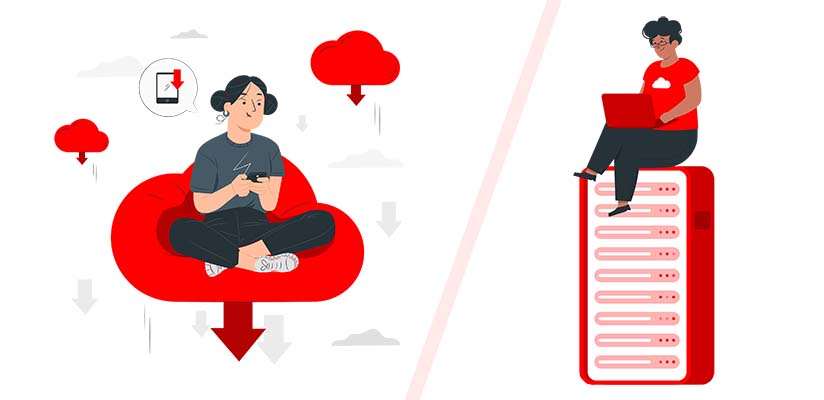
Introduction to Server Types
When considering hosting solutions, understanding the different types of servers available is crucial. Two popular options are bare-metal servers and cloud servers. Each serves distinct purposes and offers unique advantages, depending on the specific needs of your business or application.
This article is part of Rackset’s Server guides — browse the rest of the category for more in-depth tutorials on this topic.
Bare-Metal Servers
Bare-metal servers are akin to dedicated servers, where each server is a single-tenant machine. This means that the entire server is dedicated to a single client, allowing complete access to the hardware. Unlike virtualized environments, bare-metal servers do not utilize hypervisor layers, which are typically used to create virtual machines (VMs) on a server. Instead, the operating system is loaded directly onto the server, eliminating the need for additional layers and resulting in some of the fastest server performances available.
Key Features of Bare-Metal Servers
- Hardware Control: Users can configure the processor, memory, and storage to meet specific needs, as these resources are not shared with others.
- Performance: With no virtualization overhead, bare-metal servers offer high performance and reliability.
- Customization: High-end processors, RAM, and NVMe solid-state drives are often used, providing robust hardware capabilities.
Cloud Servers
Cloud servers, on the other hand, are virtualized and can be part of a larger pool of computing resources. These servers are known for their flexibility and scalability, allowing users to easily adjust resources based on demand. Cloud servers operate in a multi-tenant environment, where multiple virtual machines can run on the same physical server, managed by a hypervisor.
Key Features of Cloud Servers
- Scalability: Easily scale resources up or down to match workload requirements.
- Cost-Effectiveness: Pay-as-you-go pricing models help optimize costs based on usage.
- Flexibility: Ideal for applications with fluctuating demands, as resources can be quickly adjusted.
Comparison Table
| Feature | Bare-Metal Servers | Cloud Servers |
|---|---|---|
| Performance | High, due to direct hardware access | Variable, depending on virtualization overhead |
| Scalability | Limited to physical hardware | Highly scalable |
| Cost | Typically higher, fixed costs | Variable, pay-as-you-go |
| Customization | Extensive hardware customization | Limited by virtual environment |
What is Bare Metal Server Hosting?
Bare metal server hosting refers to a type of hosting service where a client rents a physical server dedicated exclusively to their use. Unlike virtualized environments, where multiple users share the same physical hardware, bare metal servers are single-tenant machines, meaning only one client has access to the server’s resources.
Direct Hardware Access
One of the primary advantages of bare metal servers is the direct access to hardware. Since there is no hypervisor layer, the operating system is loaded directly onto the server, eliminating the overhead associated with virtualization. This setup allows users to fully utilize the server’s CPU, memory, and storage capabilities without interference from other tenants or virtualization layers.
Customizable Hardware
With bare metal servers, users have the flexibility to configure the hardware to meet their specific needs. This includes the ability to choose:
- Processor type and speed
- Amount of RAM
- Type and size of storage, such as NVMe solid-state drives
This level of customization is not typically available in cloud server environments, where the provider controls the hardware specifications.
Performance and Reliability
Because bare metal servers are dedicated to a single user, they offer reliable and consistent performance. The absence of a hypervisor means that all the server’s resources are available to the user, resulting in some of the fastest server performance possible. This makes bare metal hosting ideal for high-performance applications and workloads that require guaranteed resources.
Use Cases for Bare Metal Servers
Bare metal servers are well-suited for a variety of applications, including:
- High-performance computing tasks
- Data-intensive applications
- Large-scale database management
- Hosting applications requiring strict compliance and security measures
These servers provide the power and stability needed for demanding workloads, making them a preferred choice for businesses with specific performance requirements.
What is Cloud Server Hosting?
Cloud server hosting is a type of web hosting service that utilizes virtualized resources to offer users scalable, flexible, and cost-effective solutions. Unlike bare-metal servers, which are single-tenant machines providing direct access to hardware, cloud servers operate in a multi-tenant environment where resources are shared among multiple users.
How Cloud Servers Work
Cloud servers are created using virtualization technology, which partitions a physical server into multiple virtual machines (VMs). Each VM operates independently, with its own operating system and applications, while sharing the underlying physical resources.
Read more: Bare Metal Servers vs. Virtual Servers: What’s the Difference?
If you need this service, Rackset’s team provides professional bare metal server with full support so you can rely on the quality and get set up quickly.
Key Features of Cloud Server Hosting
- Scalability: Cloud servers can be easily scaled up or down based on demand, allowing businesses to adjust resources as needed without significant downtime or hardware changes.
- Flexibility: Users can choose from a variety of configurations and operating systems, tailoring their environment to specific business needs.
- Cost-Effectiveness: With a pay-as-you-go pricing model, users only pay for the resources they consume, reducing unnecessary expenditures.
- Reliability: Cloud hosting providers often implement redundancy and failover mechanisms, ensuring high availability and uptime.
Benefits of Cloud Server Hosting
Cloud server hosting offers several advantages that make it a popular choice for businesses of all sizes:
- Resource Efficiency: By sharing resources, cloud servers optimize the use of hardware, reducing waste and improving efficiency.
- Disaster Recovery: Many cloud providers offer integrated backup and recovery solutions, safeguarding data against loss or corruption.
- Global Reach: Cloud hosting enables businesses to deploy applications and services across multiple geographic locations, enhancing performance and user experience.
Comparing Cloud Servers to Bare-Metal Servers
While both cloud and bare-metal servers offer reliable performance, the choice between them often depends on specific business requirements. Cloud servers excel in flexibility and cost-efficiency, making them ideal for dynamic workloads and businesses that experience variable demand. In contrast, bare-metal servers provide superior performance and control, suitable for applications requiring high computational power and security.
Performance and Customization
When evaluating the performance and customization capabilities of bare-metal and cloud servers, it’s essential to understand how each server type interacts with hardware resources and the flexibility they offer to users.
Performance
Bare-metal servers, as single-tenant machines, provide users with direct access to the hardware without the intermediary layers of virtualization. This absence of a hypervisor layer allows the operating system to be loaded directly onto the server. As a result, bare-metal servers can achieve some of the fastest processing speeds available, making them ideal for applications requiring high performance and low latency.
In contrast, cloud servers operate within a virtualized environment where multiple virtual machines (VMs) share the same physical hardware. While modern cloud infrastructure has significantly improved in terms of speed and efficiency, the presence of a hypervisor layer can introduce additional latency compared to bare-metal servers. However, cloud servers benefit from scalable resources, allowing users to adjust their computing power based on demand, which can be advantageous for applications with fluctuating workloads.
Customization
Bare-metal servers offer unparalleled customization options. Users have complete control over the hardware, enabling them to configure the processor, memory, and storage to their exact specifications. This level of control is particularly beneficial for businesses with specific hardware requirements or those running specialized applications that need precise tuning for optimal performance.
Cloud servers, on the other hand, offer a different kind of flexibility. While users cannot modify the underlying hardware, they can easily scale resources such as CPU, RAM, and storage through their cloud provider’s management interface. This scalability allows businesses to quickly adapt to changing demands without the need for physical hardware modifications.
Comparison Table
| Feature | Bare-Metal Servers | Cloud Servers |
|---|---|---|
| Performance | High, low latency due to direct hardware access. | Good, but can be affected by virtualization overhead. |
| Customization | Full hardware customization available. | Limited to resource scaling; hardware is fixed. |
| Scalability | Requires manual hardware changes. | Easy and quick through provider’s interface. |
Ultimately, the choice between bare-metal and cloud servers depends on the specific needs of the business, considering factors like performance requirements, customization needs, and scalability preferences.
Cost and Flexibility
Cost Considerations
When comparing bare metal servers and cloud servers, cost is a significant factor. Bare metal servers often require a higher initial investment due to the dedicated hardware and resources. This cost is justified by the performance benefits and exclusive access to the server’s resources.
Cloud servers, on the other hand, offer a more flexible pricing model. Users typically pay for what they use, which can be advantageous for businesses with fluctuating workloads or those that require scalability. This pay-as-you-go model can lead to cost savings, especially for short-term projects or scenarios with variable demand.
Flexibility
Flexibility is another critical aspect where cloud servers generally have the upper hand. Cloud servers allow for rapid scaling, both up and down, to meet changing demands. This is particularly useful for businesses experiencing variable traffic or seasonal spikes. The ability to quickly adjust resources ensures that businesses only pay for what they need at any given time.
Comparison Table: Cost and Flexibility
| Aspect | Bare Metal Servers | Cloud Servers |
|---|---|---|
| Initial Cost | Higher | Lower |
| Pricing Model | Fixed | Pay-as-you-go |
| Scalability | Limited | High |
| Resource Allocation | Dedicated | Shared/On-Demand |
Choosing the Right Option
The choice between bare metal and cloud servers depends on the specific needs of your business. If you require maximum performance, security, and control over your server environment, bare metal servers are the preferable choice. However, if your business values flexibility, cost-efficiency, and the ability to scale rapidly, cloud servers may be more suitable.
If you need this service, Rackset’s team provides professional cloud server with full support so you can rely on the quality and get set up quickly.
Ultimately, understanding your workload requirements and budget constraints will guide you toward the best server solution for your needs.
Security and Reliability
Security
When comparing bare metal servers to cloud servers, security is a primary consideration. Bare metal servers, being single-tenant machines, offer a higher level of physical security. The absence of a hypervisor layer means fewer attack vectors for potential threats. Users have complete control over the security configurations, allowing them to implement custom security measures tailored to their specific needs.
Cloud servers, on the other hand, typically operate in a multi-tenant environment, where multiple virtual machines share the same physical hardware. This can introduce additional security challenges, such as the risk of data breaches from neighboring virtual machines. However, reputable cloud providers implement robust security protocols and offer advanced features like encryption, firewalls, and regular security audits to mitigate these risks.
Reliability
Reliability is another critical aspect where both bare metal and cloud servers have their strengths. Bare metal servers provide consistent performance since resources are not shared with other users. This exclusivity ensures that applications run smoothly without interference from other tenants.
Cloud servers, while inherently more flexible, rely on virtualization, which can introduce variability in performance due to shared resources. However, cloud providers often offer Service Level Agreements (SLAs) that guarantee uptime and provide redundancy features such as automatic failover and data replication to enhance reliability.
Comparison Table
| Feature | Bare Metal Servers | Cloud Servers |
|---|---|---|
| Security Control | Full control, customizable security | Shared control, provider-managed security |
| Physical Security | High, single-tenant | Moderate, multi-tenant |
| Performance Consistency | High, dedicated resources | Variable, shared resources |
| Redundancy and Failover | Limited, requires custom setup | Built-in, provider-managed |
In conclusion, both bare metal and cloud servers have their unique advantages in terms of security and reliability. The choice between them should be based on specific business needs, including security requirements, performance expectations, and budget constraints.
Use Cases for Bare Metal Servers
Bare metal servers provide unparalleled performance and control, making them ideal for specific use cases where dedicated resources and hardware-level access are crucial. Here are some scenarios where bare metal servers excel:
High-Performance Computing (HPC)
High-performance computing tasks require immense processing power and speed. Bare metal servers, with their high-end processors and NVMe solid-state drives, provide the necessary computational capabilities without the overhead of virtualization layers. This makes them perfect for scientific simulations, financial modeling, and complex data analysis.
Data-Intensive Applications
Applications that process vast amounts of data, such as big data analytics and real-time data processing, benefit from the direct access to hardware resources that bare metal servers offer. The absence of a hypervisor layer ensures maximum throughput and reduced latency, crucial for time-sensitive data operations.
Gaming Servers
For gaming companies, the performance and reliability of the server are paramount. Bare metal servers provide the low-latency and high-speed connectivity required to deliver a seamless gaming experience. The ability to customize hardware also allows for optimization specific to gaming workloads.
Read more: Key Features of Bare Metal Servers
Machine Learning and AI
Machine learning and AI workloads often demand significant computational power and fast data access. Bare metal servers can be tailored with powerful GPUs and high-speed storage, providing the ideal environment for training complex models and running AI algorithms efficiently.
For heavy workloads and maximum performance, a dedicated bare-metal server gives you an entire physical machine. Rackset’s dedicated server deliver full hardware, root access and configurable port speeds for the most demanding sites and apps.
Enterprise Resource Planning (ERP) Systems
ERP systems require robust and reliable infrastructure to handle the critical operations of a business. Bare metal servers offer the stability and performance necessary to support ERP applications, ensuring smooth and uninterrupted business processes.
Comparison Table: Bare Metal vs Cloud Servers
| Feature | Bare Metal Servers | Cloud Servers |
|---|---|---|
| Performance | High, dedicated hardware | Variable, shared resources |
| Customization | Full hardware customization | Limited to virtual configurations |
| Latency | Low | Higher due to virtualization |
| Scalability | Manual scaling | Automatic, flexible scaling |
In summary, bare metal servers are the optimal choice for use cases requiring maximum performance, customization, and direct hardware access. Understanding your specific needs will help determine if a bare metal server is the right solution for your infrastructure.
Use Cases for Cloud Servers
Cloud servers offer a range of benefits that make them suitable for various use cases. Their flexibility, scalability, and cost-effectiveness make them particularly appealing to businesses and developers. Below are some common use cases where cloud servers are often the preferred choice.
1. Web Hosting
Cloud servers are ideal for web hosting, especially for websites that experience fluctuating traffic. The ability to scale resources up or down based on demand ensures that websites remain responsive and operational, even during traffic spikes.
2. Application Development and Testing
Developers often use cloud servers for application development and testing due to their flexibility. They can quickly spin up environments for development, testing, and deployment without the need for physical hardware. This allows for faster iteration and innovation.
3. Big Data Processing
Cloud servers are well-suited for big data processing tasks. They provide the computational power and storage capacity needed to handle large datasets. Cloud platforms often offer integrated tools for data analysis, making it easier to process and analyze data efficiently.
4. Disaster Recovery and Backup
Cloud servers offer reliable solutions for disaster recovery and backup. Businesses can store backups in the cloud to ensure data is secure and easily recoverable in the event of an on-premises failure. This minimizes downtime and data loss.
5. SaaS Applications
Software as a Service (SaaS) applications often rely on cloud servers for their infrastructure. The cloud’s scalability and availability enable SaaS providers to deliver services to a global audience with minimal latency and high availability.
6. Content Delivery Networks (CDNs)
Cloud servers are an integral part of Content Delivery Networks (CDNs). They help distribute content across various geographical locations, reducing latency and improving load times for global users.
Comparison Table: Cloud Servers vs Bare Metal Servers
| Feature | Cloud Servers | Bare Metal Servers |
|---|---|---|
| Scalability | High | Limited |
| Setup Time | Minutes | Hours to Days |
| Cost | Pay-as-you-go | Fixed |
| Performance | Variable | Consistent |
Choose the Right Server Solution
Unleash the true potential of your business by understanding the distinct advantages of bare metal versus cloud servers. Rackset provides tailored cloud solutions that adapt seamlessly to your evolving needs, ensuring robust performance and scalability.
Elevate your infrastructure with Rackset’s cloud server expertise!
Conclusion
In summary, the choice between bare metal and cloud servers depends on your specific business needs. Bare metal servers offer high performance, control, and security, making them ideal for resource-intensive applications that require dedicated hardware. On the other hand, cloud servers provide flexibility, scalability, and cost-efficiency, which are perfect for businesses that experience fluctuating workloads or require rapid deployment. Understanding the unique advantages and limitations of each option will help you make an informed decision that aligns with your operational goals and budget constraints.
As you evaluate your server needs, consider factors such as workload requirements, budget, and long-term business objectives. If you’re still unsure which server type is right for you, Rackset offers expert guidance and a range of hosting solutions tailored to meet diverse needs. Contact us today to explore how our services can support your business growth and infrastructure demands.
Frequently Asked Questions
What is a bare metal server?
A bare metal server is a physical server dedicated to a single tenant. It provides direct access to hardware resources without virtualization, offering high performance and customization options.
How does a cloud server differ from a bare metal server?
A cloud server is a virtualized server that runs on a shared physical infrastructure. It offers scalability and flexibility, allowing users to adjust resources as needed, unlike bare metal servers which are fixed in capacity.
What are the advantages of using bare metal servers?
Bare metal servers offer high performance, enhanced security, and full control over hardware resources. They are ideal for applications requiring dedicated resources and consistent performance.
Why choose cloud servers over bare metal servers?
Cloud servers provide scalability, cost-efficiency, and ease of management. They are suitable for businesses needing flexible resource allocation and quick deployment without the need for dedicated hardware.
Can bare metal servers and cloud servers be used together?
Yes, combining bare metal and cloud servers can optimize performance and cost. This hybrid approach allows businesses to run critical workloads on bare metal while leveraging cloud servers for scalability and flexibility.

Behzad Nategh is the Founder and CEO of Rackset, with 20+ years in web hosting, cloud infrastructure, and web design. He writes on hosting, domains, security, and growing an online business.
Leave a Reply