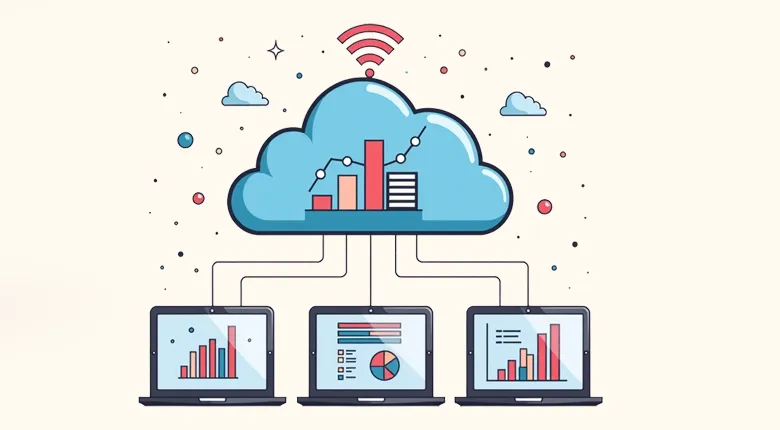
Introduction to Hybrid Cloud
As businesses continue to adopt cloud computing, the need for a flexible, scalable, and cost-effective solution has become more evident. Enter Hybrid Cloud—a computing environment that combines public and private cloud infrastructures to deliver the best of both worlds. In this guide, we will explore what a hybrid cloud is, how it works, and why businesses are increasingly turning to it for their cloud strategy.
This article is part of Rackset’s Server guides — browse the rest of the category for more in-depth tutorials on this topic.
What is Hybrid Cloud?
A Hybrid Cloud is a cloud computing model that integrates both public cloud (third-party cloud services like AWS, Google Cloud, or Microsoft Azure) and private cloud (dedicated, on-premises infrastructure). This setup allows organizations to leverage the scalability and cost benefits of public clouds while maintaining the security and control of private clouds.
How Hybrid Cloud Works
Hybrid cloud systems operate by enabling data and application portability across public and private environments. Businesses can run specific workloads in a private cloud while utilizing the public cloud for additional computing power, backup, or disaster recovery. This flexibility allows for:
- Dynamic Workload Management: Moving workloads between environments as needed to optimize resources and costs.
- Enhanced Security: Keeping sensitive data on private clouds while using public clouds for less critical operations.
- Scalability: Seamlessly scaling operations by tapping into the vast resources of public clouds during peak demand.
Benefits of Hybrid Cloud
The hybrid cloud model provides several key benefits:
- Cost Efficiency: By using public clouds for non-sensitive workloads, businesses can reduce costs associated with maintaining extensive on-premises infrastructure.
- Flexibility and Scalability: The ability to scale resources up or down quickly in response to changing business needs.
- Improved Business Continuity: Enhanced disaster recovery options and reduced risk of downtime.
- Compliance and Security: Greater control over data security and compliance by keeping sensitive information within private cloud environments.
How Hybrid Cloud Architecture Works
Hybrid cloud architecture functions by seamlessly integrating public and private cloud environments, allowing data and applications to move fluidly between them. This setup provides businesses with the flexibility to optimize their IT resources, ensuring efficiency and cost-effectiveness.
Components of Hybrid Cloud Architecture
- Public Cloud: Utilizes third-party cloud service providers like AWS, Google Cloud, or Microsoft Azure to offer scalable resources.
- Private Cloud: Dedicated, on-premises infrastructure that offers enhanced security and control.
- Network Connectivity: Secure and reliable network connections are essential for data transfer and communication between the public and private clouds.
- Unified Management Tools: Tools that allow for centralized management of resources across both cloud environments.
Key Processes in Hybrid Cloud
Data and Application Portability
Hybrid cloud systems enable the movement of data and applications between public and private clouds. This is achieved through the use of APIs and cloud management platforms that facilitate interoperability.
Dynamic Workload Management
Organizations can dynamically allocate workloads based on current demands and resource availability. For example, a business might run high-security workloads in a private cloud while leveraging the public cloud for additional capacity during peak times.
Scalability and Elasticity
Hybrid cloud architecture allows for rapid scaling of resources. Businesses can scale out to the public cloud when demand spikes, ensuring that they only pay for the additional resources when needed.
Implementation Considerations
- Assess Needs: Determine which workloads are best suited for the public cloud and which require the security of the private cloud.
- Integration Strategy: Develop a strategy for integrating public and private cloud resources, including network configuration and data synchronization.
- Security Protocols: Implement robust security measures to protect data as it moves between cloud environments.
- Compliance Requirements: Ensure that the hybrid cloud setup complies with industry regulations and standards.
Conclusion
By understanding how hybrid cloud architecture works, businesses can effectively leverage its benefits, achieving a balance between cost efficiency and security. This architecture not only supports dynamic workload management but also provides the scalability and flexibility necessary for modern enterprises.
Core Components of Hybrid Cloud
Understanding the core components of a hybrid cloud is essential for businesses to effectively implement and manage this model. These components work together to create a seamless and integrated cloud environment that leverages both public and private cloud resources.
1. Public Cloud
The public cloud is a key component of the hybrid cloud model, offering scalable and cost-effective resources managed by third-party providers such as AWS, Google Cloud, or Microsoft Azure. It enables organizations to access vast computing power and storage without the need to invest in physical infrastructure.
2. Private Cloud
The private cloud component is dedicated to a single organization, providing enhanced security and control over data and applications. It can be hosted on-premises or by a third-party service, but it remains isolated from external users, ensuring compliance with regulatory requirements and internal policies.
3. Hybrid Cloud Management Tools
Effective management tools are crucial for overseeing the hybrid cloud environment. These tools provide visibility, orchestration, and automation across both public and private clouds. They help in monitoring performance, managing workloads, and ensuring security and compliance.
If you need this service, Rackset’s team provides professional cloud server with full support so you can rely on the quality and get set up quickly.
4. Network Connectivity
Reliable and secure network connectivity is essential for data and application portability between public and private clouds. This component includes VPNs, direct connections, and other networking solutions that facilitate seamless integration and communication across the hybrid cloud infrastructure.
5. Data Integration and Interoperability
Data integration tools ensure that data can move freely and securely between public and private clouds. Interoperability standards and APIs play a critical role in enabling applications and services to work together across different cloud environments, maintaining consistency and efficiency.
6. Security and Compliance
Security is a paramount concern in hybrid cloud environments. Implementing robust security measures, such as encryption, identity and access management, and compliance monitoring, ensures that data and applications remain protected across both public and private clouds.
Table: Key Security Measures
| Security Measure | Description |
|---|---|
| Encryption | Protects data in transit and at rest using cryptographic techniques. |
| Identity and Access Management (IAM) | Controls user access to resources and data based on roles and permissions. |
| Compliance Monitoring | Ensures adherence to regulatory standards and internal policies. |
Benefits of Hybrid Cloud Solutions
As businesses continue to seek optimal cloud strategies, hybrid cloud solutions have emerged as a compelling choice. By integrating the strengths of both public and private cloud environments, hybrid cloud solutions offer a range of benefits that address common business challenges related to flexibility, scalability, security, and cost-effectiveness.
1. Enhanced Flexibility and Scalability
Hybrid cloud solutions provide businesses with the flexibility to scale their IT resources dynamically. Companies can adjust their resource allocation based on current demands, ensuring optimal performance without overcommitting to infrastructure investments.
- Dynamic Resource Allocation: Easily scale up during peak times by leveraging public cloud resources and scale down during off-peak periods.
- Workload Optimization: Deploy workloads in the most appropriate environment, optimizing for performance and cost.
2. Improved Security and Compliance
Hybrid cloud solutions allow businesses to maintain control over sensitive data by keeping it within a private cloud while utilizing the public cloud for less sensitive operations. This setup enhances security and compliance with industry regulations.
- Data Sovereignty: Keep critical data on-premises to meet regulatory requirements.
- Enhanced Security Protocols: Implement consistent security measures across both environments.
3. Cost Efficiency
By combining public and private clouds, businesses can optimize their IT spending. Hybrid cloud solutions allow companies to pay only for the public cloud resources they use while maintaining a predictable cost structure for private cloud operations.
- Reduced Capital Expenditure: Minimize upfront costs by leveraging public cloud services.
- Operational Cost Savings: Optimize resource usage to avoid underutilization and overprovisioning.
4. Business Continuity and Disaster Recovery
Hybrid cloud solutions enhance business continuity by providing robust disaster recovery options. Businesses can back up critical data and applications in the public cloud, ensuring quick recovery in the event of a failure.
- Rapid Recovery: Use public cloud resources for quick restoration of services.
- Geographic Redundancy: Distribute backups across multiple locations to prevent data loss.
Conclusion
The benefits of hybrid cloud solutions are clear: flexibility, enhanced security, cost savings, and improved disaster recovery capabilities. By adopting a hybrid cloud approach, businesses can better align their IT infrastructure with their strategic goals, ensuring they are well-positioned to meet the demands of a dynamic digital landscape.
Use Cases for Hybrid Cloud
As businesses strive to optimize their IT infrastructure, hybrid cloud solutions offer several compelling use cases. By combining public and private cloud environments, organizations can address specific needs that neither cloud type can fully satisfy on its own. Here are some practical applications of hybrid cloud:
1. Dynamic Workload Management
Hybrid cloud allows businesses to manage dynamic workloads effectively. Companies can run stable, predictable workloads on private clouds for enhanced security and control. Meanwhile, they can leverage the scalability of public clouds to handle spikes in demand without over-investing in private infrastructure.
2. Disaster Recovery and Business Continuity
Hybrid cloud solutions are ideal for disaster recovery strategies. By utilizing a public cloud for backup and recovery purposes, businesses can ensure data redundancy and quick recovery times. This setup provides a cost-effective alternative to maintaining a secondary physical data center.
3. Development and Testing
Developers can benefit from the hybrid cloud by using public cloud resources for development and testing. This approach allows for rapid provisioning of environments, reducing the time and cost associated with setting up physical infrastructure. Once applications are tested and ready, they can be deployed on a private cloud for production.
Read more: Cloud Hosting vs VPS Hosting – Benefits and Differences
4. Regulatory Compliance and Data Security
For industries with stringent regulatory requirements, hybrid cloud offers a solution that balances compliance and flexibility. Sensitive data can be stored and processed within a private cloud to maintain compliance, while less sensitive operations can run on a public cloud to take advantage of its scalability.
When you need to scale on demand, cloud hosting spreads your site across redundant infrastructure for better uptime and performance during traffic spikes.
5. Legacy Systems Integration
Many organizations have legacy systems that are costly to replace or migrate entirely to the cloud. A hybrid cloud strategy enables these businesses to integrate legacy systems with new cloud-based applications, facilitating a gradual transition to modern infrastructure without disrupting existing operations.
6. Cost Optimization
Hybrid cloud environments help optimize costs by allowing businesses to choose the most cost-effective platform for each workload. Companies can avoid the capital expenditures associated with expanding private infrastructure and instead utilize public clouds for variable workloads, paying only for what they use.
In summary, hybrid cloud provides a versatile solution for a wide range of business needs, offering the flexibility, scalability, and cost-efficiency that modern enterprises require.
Security and Compliance in Hybrid Cloud
As organizations integrate hybrid cloud solutions, ensuring robust security and compliance becomes a critical aspect of their cloud strategy. The hybrid model offers unique advantages but also presents specific challenges in maintaining data integrity and compliance with industry regulations.
Security Challenges in Hybrid Cloud
Hybrid cloud environments create a complex landscape where security measures must adapt to both public and private cloud infrastructures. Key security challenges include:
- Data Breaches: The risk of unauthorized access increases as data moves between public and private clouds.
- Data Sovereignty: Compliance with regional data laws can be complicated when data is stored across multiple jurisdictions.
- Access Management: Ensuring secure and seamless access across different cloud environments requires robust identity and access management (IAM) solutions.
Implementing Security Measures
To address these challenges, businesses should implement comprehensive security strategies:
- Encryption: Encrypt data both in transit and at rest to protect sensitive information.
- Multi-Factor Authentication (MFA): Use MFA to enhance security on user accounts accessing cloud resources.
- Network Security: Employ firewalls and intrusion detection systems to monitor and protect data traffic.
- Regular Audits: Conduct regular security audits and vulnerability assessments to identify and mitigate risks.
Compliance in Hybrid Cloud
Maintaining compliance in a hybrid cloud environment requires adherence to various regulatory standards such as GDPR, HIPAA, and PCI-DSS. Organizations must:
- Understand Regulatory Requirements: Identify the specific compliance requirements relevant to their industry and region.
- Implement Compliance Controls: Use automated tools to monitor compliance and generate reports for audits.
- Data Localization: Ensure data storage complies with local data residency laws to avoid legal issues.
Compliance Tools and Services
Many cloud providers offer built-in compliance tools and services to assist businesses in meeting regulatory requirements. These tools can help automate compliance checks and provide real-time insights into compliance status.
| Provider | Compliance Tools |
|---|---|
| AWS | AWS Compliance Center, AWS Artifact |
| Google Cloud | Google Cloud Compliance Reports, Security Command Center |
| Microsoft Azure | Azure Security Center, Compliance Manager |
By leveraging these tools and implementing robust security practices, businesses can effectively manage security and compliance in their hybrid cloud environments, ensuring data protection and regulatory adherence.
Challenges in Hybrid Cloud Deployment
While hybrid cloud solutions offer numerous advantages, deploying them presents several challenges that organizations must address to ensure successful implementation. Understanding these challenges is crucial for developing a robust hybrid cloud strategy.
Complexity in Integration
Integrating public and private cloud infrastructures can be complex due to differences in architecture, technology, and vendor-specific APIs. Ensuring seamless interoperability between these environments requires careful planning and execution.
- Compatibility Issues: Different cloud providers may have unique platforms and services, leading to compatibility issues.
- API Management: Managing and integrating APIs across multiple cloud environments can be challenging.
Security and Compliance
Maintaining security and compliance across hybrid cloud environments is a significant concern for businesses. The movement of data between public and private clouds can expose sensitive information to potential threats.
- Data Security: Ensuring data is secure during transit and at rest is critical.
- Regulatory Compliance: Adhering to industry regulations and standards across different cloud environments can be complex.
Cost Management
While hybrid clouds can offer cost savings, managing expenses across multiple platforms is challenging. Organizations need to monitor and optimize resource usage to prevent unexpected costs.
For projects that need guaranteed resources and full root control, a VPS is the right step up from shared hosting. With VPS hosting you get dedicated CPU/RAM, NVMe storage, a dedicated IP and high uptime, deployed in minutes.
- Resource Optimization: Ensuring efficient use of resources to avoid wastage.
- Billing Complexity: Different pricing models from various providers can complicate billing.
Data and Application Portability
Moving data and applications between cloud environments can be difficult, especially if there are differences in infrastructure and services.
- Data Migration: Transferring large volumes of data without disruption can be challenging.
- Application Compatibility: Ensuring applications run smoothly across different environments requires careful testing and adaptation.
Performance and Reliability
Ensuring consistent performance and reliability across hybrid cloud environments requires robust monitoring and management tools.
- Latency Issues: Data transfer between clouds can introduce latency.
- Service Reliability: Dependence on multiple vendors can impact service reliability.
Future Trends in Hybrid Cloud Technology
As the hybrid cloud continues to gain traction among businesses seeking a balanced cloud strategy, several future trends are emerging that promise to shape the landscape of hybrid cloud technology. These trends are driven by the ongoing need for flexibility, scalability, and enhanced security in cloud computing environments.
Increased Adoption of AI and Machine Learning
The integration of artificial intelligence (AI) and machine learning (ML) into hybrid cloud environments is set to accelerate. AI and ML can optimize resource allocation, enhance security protocols, and automate routine tasks, making hybrid clouds more efficient and responsive to business needs.
Edge Computing Integration
Edge computing is transforming how data is processed and analyzed by bringing computation closer to the data source. In hybrid cloud models, integrating edge computing allows for real-time data processing and reduced latency, which is crucial for applications requiring immediate insights.
Enhanced Security Measures
Security remains a top priority in hybrid cloud implementations. Future trends indicate a rise in advanced security solutions, such as zero-trust models and enhanced encryption techniques, to protect data across both public and private clouds.
Serverless Computing Expansion
Serverless computing, which allows developers to build applications without managing the underlying infrastructure, is gaining momentum in hybrid cloud environments. This trend facilitates faster development cycles and cost savings, as businesses only pay for the compute resources they use.
Benefits of Serverless Computing in Hybrid Cloud
- Reduced operational overhead
- Scalability on demand
- Cost efficiency
- Improved developer productivity
Interoperability and Open Standards
There is a growing emphasis on interoperability and the adoption of open standards within hybrid cloud ecosystems. This trend ensures seamless integration and data exchange between different cloud platforms, enabling businesses to avoid vendor lock-in and leverage best-of-breed solutions.
Advanced Data Management and Analytics
With the exponential growth of data, hybrid cloud solutions are increasingly incorporating advanced data management and analytics capabilities. This trend allows businesses to extract valuable insights from their data, driving informed decision-making and innovation.
Conclusion
The future of hybrid cloud technology is poised for significant advancements, driven by innovations in AI, edge computing, and enhanced security measures. Organizations that stay abreast of these trends and adapt their cloud strategies accordingly will be well-positioned to harness the full potential of hybrid cloud solutions.
Elevate Your Hybrid Cloud Strategy
Unlock the full potential of hybrid cloud with Rackset’s seamless integration solutions. Effortlessly balance workloads and optimize resources for unmatched performance and flexibility.
Transform your cloud experience today!
Conclusion
In summary, hybrid cloud solutions offer a flexible and scalable approach to modern computing needs, combining the best aspects of both private and public clouds. By leveraging the hybrid model, businesses can optimize costs, enhance data security, and improve performance. The ability to dynamically allocate resources as needed while maintaining control over sensitive data makes hybrid cloud an attractive option for organizations aiming to stay competitive and agile in a rapidly changing technological landscape. Implementing a hybrid cloud strategy requires careful planning and execution to ensure that the infrastructure aligns with business goals and compliance requirements.
As you consider transitioning to a hybrid cloud environment, it’s crucial to partner with a reliable service provider who can offer tailored solutions and expert guidance. Rackset is here to support your cloud journey with our robust hosting services, ensuring seamless integration and management of your hybrid cloud infrastructure. Explore our range of products and take the next step towards a more efficient and secure IT strategy by visiting our website or contacting our team of experts today.
Frequently Asked Questions
What is a hybrid cloud?
A hybrid cloud is an IT architecture that combines public cloud services with private cloud or on-premises infrastructure, enabling data and applications to be shared between them.
What are the benefits of using a hybrid cloud?
Hybrid clouds offer flexibility, scalability, and cost-efficiency by allowing businesses to leverage the benefits of both public and private cloud environments. They also enhance security and compliance by keeping sensitive data on-premises.
How does a hybrid cloud improve scalability?
Hybrid clouds improve scalability by allowing businesses to scale their resources up or down based on demand, using public cloud resources to handle peak loads while maintaining core operations on private infrastructure.
What are the challenges of implementing a hybrid cloud?
Implementing a hybrid cloud can be complex due to the need for seamless integration between different environments, potential security concerns, and the requirement for robust network connectivity and management tools.
How can businesses ensure data security in a hybrid cloud?
Businesses can ensure data security in a hybrid cloud by implementing strong encryption, maintaining compliance with regulatory standards, and using advanced identity and access management solutions to protect sensitive data.

Behzad Nategh is the Founder and CEO of Rackset, with 20+ years in web hosting, cloud infrastructure, and web design. He writes on hosting, domains, security, and growing an online business.
Leave a Reply