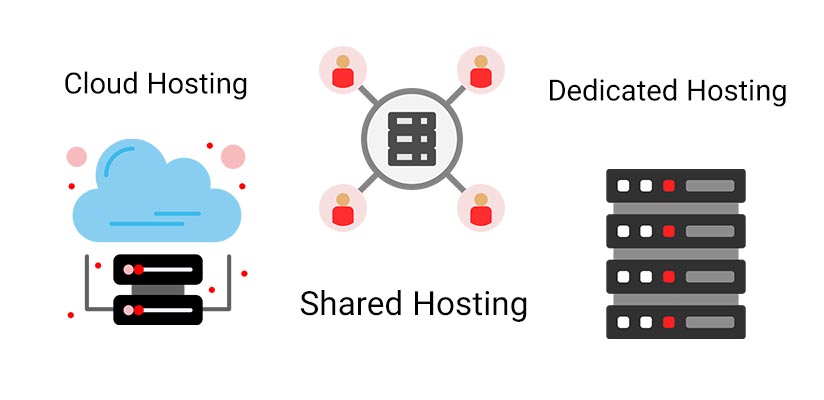
Understanding Web Hosting Types
When you are ready to launch a website, selecting the right web host is a challenging decision. It’s not an easy task, even for experienced developers, given the number of web hosting companies that offer various types of services and features. Before you choose a web host, make sure to determine what type of hosting you require.
This article is part of Rackset’s Hosting guides — browse the rest of the category for more in-depth tutorials on this topic.
Shared Hosting
For those who are building their first website, shared hosting is often the best option. In shared hosting, your website will be placed on the same server as hundreds or even thousands of other websites. Each customer must share the server’s resources, including CPU time, RAM, and disk space, with all other customers.
Imagine living in a shared apartment. All residents of the building share common amenities like elevators, stairwells, parking, and garbage collection.
Pros of Shared Hosting
- Cost-effective: Hosting companies can charge less because resources are shared.
- Easy to manage: Suitable for beginners, as it usually comes with a user-friendly control panel.
Cons of Shared Hosting
- Limited resources: Performance can be affected if other websites on the server use too much bandwidth or storage.
- Less control: Limited access to server configurations and settings.
Cloud Hosting
Cloud hosting utilizes a network of virtual servers to host websites, ensuring high availability and scalability. Resources are drawn from multiple servers, which can adapt to traffic spikes and provide redundancy.
Pros of Cloud Hosting
- Scalability: Easily adjust resources based on your website’s needs.
- Reliability: High uptime due to multiple server redundancies.
Cons of Cloud Hosting
- Complexity: May require more technical knowledge to manage.
- Variable costs: Pricing can fluctuate based on resource usage.
Dedicated Hosting
Dedicated hosting provides an entire server exclusively for your website. This means you have full control over the server’s resources and configurations, making it ideal for large businesses or websites with high traffic.
Pros of Dedicated Hosting
- Full control: Complete access to server resources and configurations.
- Enhanced performance: No resource sharing, leading to better performance.
Cons of Dedicated Hosting
- High cost: More expensive due to exclusive resource allocation.
- Management: Requires technical expertise to maintain and manage the server.
What Is Shared Hosting?
For those building their first website, shared hosting is often the best option. In a shared hosting environment, your website is placed on the same server as hundreds or even thousands of other websites. This means that all customers share the server’s resources, including CPU time, RAM, and disk space.
How Shared Hosting Works
Think of shared hosting like living in an apartment building. All residents share common amenities like elevators, stairwells, parking, and garbage collection. Similarly, in shared hosting, each website shares the server’s resources. This setup allows hosting providers to offer services at a lower cost, making it an attractive choice for beginners.
Read more: Dedicated Hosting vs. VPS Hosting – Which One Is Better?
When you need to scale on demand, cloud hosting spreads your site across redundant infrastructure for better uptime and performance during traffic spikes.
Pros of Shared Hosting
- Affordability: Shared hosting is typically the most economical option, making it ideal for small businesses and personal websites.
- Ease of Use: Hosting providers often offer user-friendly control panels, such as cPanel, to simplify website management.
- Maintenance: The hosting provider handles server maintenance, updates, and security, allowing you to focus on your website’s content.
Cons of Shared Hosting
- Limited Resources: Since resources are shared, high traffic on one website can affect the performance of others on the same server.
- Less Control: Users have limited control over server settings and configurations.
- Security Risks: Shared environments can be more vulnerable to security breaches if one website is compromised.
Is Shared Hosting Right for You?
Shared hosting is best suited for small websites, blogs, and startups with low to moderate traffic. If you’re launching your first website and need an affordable solution with minimal technical management, shared hosting is a practical choice. However, if your website grows and requires more resources or enhanced security, you may need to consider upgrading to a VPS or dedicated hosting plan.
Pros and Cons of Shared Hosting
Pros of Shared Hosting
- Cost-Effective: Shared hosting is one of the most affordable options available, making it ideal for beginners and small businesses. Hosting companies can offer lower prices because multiple websites share the same server resources.
- User-Friendly: Most shared hosting plans come with easy-to-use control panels, such as cPanel or Plesk, which simplify website management for users with limited technical knowledge.
- Maintenance-Free: The hosting provider manages server maintenance, security updates, and software installations, allowing you to focus on your website content and business.
- Scalability: Many shared hosting plans offer the ability to upgrade to higher-tier plans with more resources as your website grows.
- Technical Support: Shared hosting providers typically offer customer support to assist with any hosting-related issues.
Cons of Shared Hosting
- Limited Resources: Since multiple websites share the same server, resources such as CPU, RAM, and disk space are limited. This can affect your website’s performance, especially during traffic spikes.
- Performance Issues: Your website’s speed and uptime may be impacted by the activities of other websites on the same server, a phenomenon known as the “bad neighbor effect.”
- Security Risks: Shared hosting environments are more vulnerable to security breaches because a compromise on one website could potentially affect all others on the same server.
- Lack of Customization: Users have limited control over server configurations and cannot install custom software or applications, which can be restrictive for advanced users.
- Limited Traffic Handling: Shared hosting is not suitable for websites expecting high traffic volumes, as it may lead to slow load times and potential downtime.
What is Dedicated Hosting?
Dedicated hosting is a type of web hosting where a client leases an entire server exclusively for their use. This means that all of the server’s resources, such as CPU, RAM, and disk space, are dedicated solely to the client’s websites or applications. Unlike shared hosting, where resources are divided among many users, dedicated hosting provides full control and performance capabilities.
Key Features of Dedicated Hosting
- Exclusive Resources: All server resources are available to a single user, ensuring optimal performance.
- Customization: Users have the freedom to configure the server according to their specific needs, including operating system choice, software installations, and security settings.
- Enhanced Security: With no other users on the server, there is a reduced risk of vulnerabilities and security breaches.
- High Performance: Ideal for high-traffic websites or applications that require significant processing power and reliability.
Who Should Consider Dedicated Hosting?
Dedicated hosting is best suited for businesses and individuals who require a high level of performance, security, and customization. It is particularly beneficial for:
- Large enterprises with high-traffic websites.
- Businesses that need custom server configurations.
- Organizations handling sensitive data that require stringent security measures.
- Developers who need full control over their server environment.
Pros and Cons of Dedicated Hosting
| Pros | Cons |
|---|---|
| Full control over server configurations. | Higher cost compared to shared hosting. |
| Enhanced security and privacy. | Requires technical expertise to manage. |
| Dedicated resources ensure high performance. | May require additional time for setup and maintenance. |
Conclusion
Dedicated hosting is a powerful option for those who need complete control over their server environment and the highest level of performance. While it may come with a higher price tag and require technical knowledge, the benefits of exclusive resources and enhanced security make it a worthwhile investment for many businesses and developers.
Pros and Cons of Dedicated Hosting
Pros of Dedicated Hosting
- Full Control: With dedicated hosting, you have complete administrative access to the server, allowing you to customize it to meet your specific needs. This includes installing software, configuring settings, and managing security protocols.
- High Performance: Dedicated servers offer superior performance because all the server’s resources—CPU, RAM, and bandwidth—are allocated exclusively to your website. This is ideal for high-traffic websites or applications that require significant processing power.
- Enhanced Security: Since you are not sharing the server with other users, the risk of security breaches is reduced. You can implement advanced security measures such as firewalls and intrusion detection systems tailored to your requirements.
- Reliability: Dedicated hosting provides a stable environment with minimal downtime, making it suitable for businesses that cannot afford service interruptions.
Cons of Dedicated Hosting
- Cost: Dedicated hosting is significantly more expensive than shared or cloud hosting options. This is due to the exclusive use of server resources and the level of control provided.
- Technical Expertise Required: Managing a dedicated server requires a higher level of technical knowledge. Users need to handle server maintenance, updates, and troubleshooting, which can be challenging for those without IT expertise.
- Maintenance Responsibility: With greater control comes the responsibility of managing the server’s hardware and software. This includes ensuring regular updates and backups, which can be time-consuming.
- Lack of Scalability: Unlike cloud hosting, scaling resources on a dedicated server can be difficult and often requires physical hardware upgrades, which may lead to downtime.
Dedicated hosting is ideal for large businesses or websites with high traffic that need maximum control and performance. However, it requires a significant investment in both cost and technical expertise, making it less suitable for small businesses or individuals with limited resources.
Introduction to Cloud Hosting
Cloud hosting is a type of web hosting that uses multiple servers to balance the load and maximize uptime. Unlike traditional hosting options, where a single server hosts multiple websites, cloud hosting utilizes a network of interconnected servers. This architecture provides enhanced reliability, scalability, and performance, making it an attractive option for businesses of all sizes.
How Cloud Hosting Works
In cloud hosting, your website is hosted on a virtual partition that draws its resources from an extensive network of physical servers. This setup allows for seamless scaling and resource allocation, ensuring that your website remains operational even if one server fails.
Read more: Reseller Hosting vs Shared Hosting – What Are the Differences?
If you need this service, Rackset’s team provides professional shared hosting with full support so you can rely on the quality and get set up quickly.
- Resource Distribution: Resources such as CPU, RAM, and storage are distributed across multiple servers, preventing any single point of failure.
- Load Balancing: Traffic is evenly distributed across servers, ensuring optimal performance during peak times.
- Scalability: Easily scale resources up or down based on demand without any downtime.
Benefits of Cloud Hosting
Cloud hosting offers several advantages that make it a preferred choice for many businesses:
- Reliability: With data mirrored across multiple servers, cloud hosting provides redundancy and high availability.
- Scalability: Resources can be adjusted in real-time to accommodate traffic spikes, ensuring consistent performance.
- Cost-Effective: Pay-as-you-go pricing models allow businesses to only pay for the resources they use, making it a cost-effective solution.
Use Cases for Cloud Hosting
Cloud hosting is ideal for:
- High-Traffic Websites: Websites that experience fluctuating traffic can benefit from the scalability of cloud hosting.
- eCommerce Sites: With the ability to handle large volumes of traffic and transactions, cloud hosting is perfect for online stores.
- Growing Businesses: Businesses expecting growth can easily scale their hosting resources without migrating to a new server.
Conclusion
Choosing the right hosting service is crucial for the success of your website. Cloud hosting offers a flexible, reliable, and scalable solution that can adapt to the needs of your business, making it an excellent choice for those looking to ensure their website’s performance and availability.
Pros and Cons of Cloud Hosting
Cloud hosting is a modern approach that utilizes a network of virtual servers to host websites. This type of hosting offers a range of advantages and some drawbacks, making it suitable for certain types of projects and less so for others.
Pros of Cloud Hosting
- Scalability: One of the most significant benefits of cloud hosting is its scalability. You can easily increase or decrease resources as needed, making it ideal for websites with fluctuating traffic.
- Reliability: Cloud hosting offers high reliability since it uses multiple servers. If one server fails, another can take over, minimizing downtime.
- Performance: With cloud hosting, your website can benefit from load balancing across multiple servers, which can enhance performance and speed.
- Cost-Effectiveness: Although not as cheap as shared hosting, cloud hosting can be more cost-effective than dedicated hosting, especially for businesses that need flexibility in resource allocation.
- Security: Cloud hosting providers often offer robust security measures, including data encryption, firewalls, and regular backups, which can help protect your website from attacks.
Cons of Cloud Hosting
- Complexity: Cloud hosting can be more complex to set up and manage, especially for users who are not familiar with cloud environments.
- Cost Variability: While it can be cost-effective, the pay-as-you-go model can lead to unexpected expenses if resource usage spikes unexpectedly.
- Limited Control: Compared to dedicated hosting, cloud hosting offers less control over the server environment, which might be a concern for businesses with specific server configuration needs.
In summary, cloud hosting is a versatile and reliable choice for websites that require flexibility and scalability. However, it may not be the best option for those who need simple solutions or have tight control over their server environment. Consider your specific needs and technical expertise when deciding if cloud hosting is right for your website.
Choosing the Right Hosting for Your Needs
When you are ready to launch a website, selecting the right web host can be a challenging decision. It’s not an easy task, even for experienced developers, given the number of web hosting companies offering various types of services and features. To make an informed decision, it’s crucial to understand the differences between cloud, shared, and dedicated hosting, and how each aligns with your specific needs.
Read more: Understanding Dedicated vs Shared Hosting
Assess Your Requirements
Before you choose a web host, make sure to determine what type of hosting you require. Consider the following factors:
For heavy workloads and maximum performance, a dedicated bare-metal server gives you an entire physical machine. Rackset’s dedicated server deliver full hardware, root access and configurable port speeds for the most demanding sites and apps.
- Budget: How much are you willing to spend on hosting?
- Traffic Expectations: How much traffic do you expect your website to handle?
- Technical Expertise: Do you have the technical skills to manage server configurations?
- Scalability: Will your hosting needs grow over time?
- Performance: Do you need high performance and reliability?
Shared Hosting: Best for Beginners
Shared hosting is ideal for those who are building their first website. It is the most cost-effective option since the server resources are shared among multiple websites. However, this also means that performance can be affected by other sites on the same server.
- Pros: Affordable, easy to manage, no technical expertise required.
- Cons: Limited resources, possible performance issues.
Dedicated Hosting: For High Traffic Websites
Dedicated hosting provides an entire server for your website, offering the highest level of performance and control. This is suitable for high-traffic websites that require significant resources.
- Pros: Full control, high performance, enhanced security.
- Cons: Expensive, requires technical expertise.
Cloud Hosting: Flexible and Scalable
Cloud hosting is a flexible solution that allows your website to draw resources from multiple servers. It is ideal for websites that experience variable traffic and require scalability.
- Pros: Scalable, reliable, pay-as-you-go pricing.
- Cons: Can become expensive with high usage, complex setup.
Conclusion
Choosing the right hosting depends on your specific needs and future plans for your website. Evaluate your requirements carefully and consider starting with shared hosting if you’re new, while cloud or dedicated hosting might be better for larger, high-traffic sites.
Elevate Your Hosting Experience
Transform your website’s performance with Rackset’s cloud hosting. Enjoy the perfect balance of reliability, scalability, and speed that outshines shared and dedicated options.
Switch to Rackset’s cloud hosting today!
Conclusion
Choosing the right hosting solution is crucial for the success of your online presence. Cloud hosting offers scalability and flexibility, making it ideal for businesses expecting variable traffic or growth. Shared hosting is cost-effective and easy to manage, which suits small websites or startups with limited budgets. Dedicated hosting provides maximum control and performance, perfect for large enterprises or websites with high traffic demands. Each option has its benefits, and the best choice depends on your specific needs and future plans.
As you evaluate your hosting options, consider factors such as budget, expected traffic, technical expertise, and long-term goals. Rackset offers a range of hosting solutions tailored to meet diverse requirements, ensuring you have the support and resources necessary to succeed online. Explore our hosting plans today and find the perfect fit for your website’s needs.
Frequently Asked Questions
What is the main difference between cloud, shared, and dedicated hosting?
Cloud hosting utilizes a network of virtual servers to host websites, offering scalability and reliability. Shared hosting involves multiple websites sharing a single server’s resources, making it cost-effective but less flexible. Dedicated hosting provides an entire server for one website, ensuring high performance and full control.
Which type of hosting is best for a small business?
Shared hosting is often suitable for small businesses due to its affordability and ease of use. However, if a business anticipates rapid growth or fluctuating traffic, cloud hosting might be a better option for its scalability.
How does the cost of cloud hosting compare to shared and dedicated hosting?
Shared hosting is generally the most affordable option, while cloud hosting costs can vary based on usage and scalability needs. Dedicated hosting is the most expensive due to the exclusive use of a server.
Can I upgrade from shared to dedicated hosting easily?
Yes, most hosting providers offer upgrade paths from shared to dedicated hosting. The process typically involves migrating your website data and may require some downtime during the transition.
What are the security differences between cloud, shared, and dedicated hosting?
Dedicated hosting offers the highest security since resources are not shared with other users. Cloud hosting provides robust security features and redundancy, while shared hosting may have more vulnerabilities due to resource sharing.

Behzad Nategh is the Founder and CEO of Rackset, with 20+ years in web hosting, cloud infrastructure, and web design. He writes on hosting, domains, security, and growing an online business.
Leave a Reply