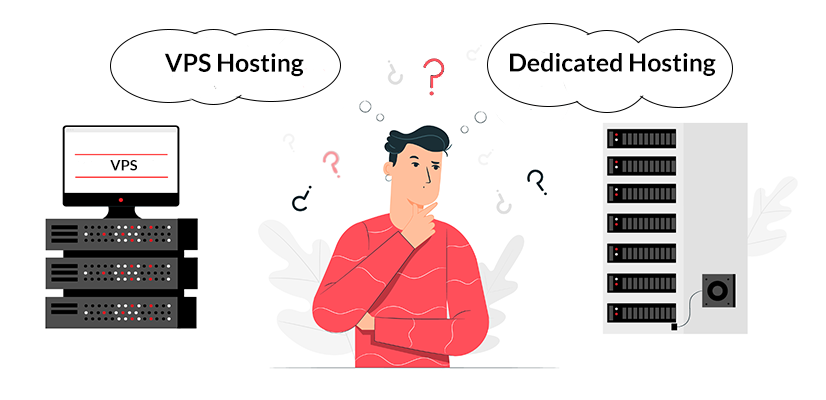
Understanding Web Hosting Environments
Choosing a new home for your website can be challenging, given the numerous options available. A hosting environment is where your data is stored; without it, there would be no website or application. The two primary hosting options are dedicated hosting and VPS hosting. In this article, we will discuss the differences between Dedicated Hosting and VPS Hosting.
This article is part of Rackset’s Server guides — browse the rest of the category for more in-depth tutorials on this topic.
What is Dedicated Hosting?
Dedicated hosting provides a single server entirely devoted to your website or application. This means that all the server’s resources, such as CPU, RAM, and bandwidth, are exclusively at your disposal. This hosting environment is ideal for large businesses or high-traffic websites that require maximum performance, security, and control.
- Performance: Since resources are not shared, dedicated hosting offers superior performance and speed.
- Control: Full root and administrative access allow for complete customization of the server environment.
- Security: Enhanced security measures can be implemented, as you are not sharing the server with other users.
What is VPS Hosting?
VPS stands for Virtual Private Server. It’s an environment where multiple websites are hosted on the same server, each allocated specific resources such as bandwidth and RAM. A VPS uses a technology known as a hypervisor, which allows resources to be borrowed from another website if they are not being used and your website needs more.
- Cost-Effective: VPS hosting is generally more affordable than dedicated hosting, making it suitable for medium-sized websites.
- Scalability: Resources can be easily adjusted as your website grows.
- Customization: While not as customizable as dedicated hosting, VPS offers more control than shared hosting.
Comparing Hosting Environments
| Feature | Dedicated Hosting | VPS Hosting |
|---|---|---|
| Resource Allocation | Exclusive | Shared but isolated |
| Performance | High | Moderate to High |
| Control | Full | Partial |
| Cost | Higher | Moderate |
What is VPS Hosting?
VPS stands for Virtual Private Server. It is a type of hosting environment where multiple websites share the same physical server but are allocated specific resources such as bandwidth and RAM. This setup is achieved through the use of virtualization technology, which creates isolated virtual environments for each user on the server.
How VPS Hosting Works
VPS hosting uses a technology called a hypervisor. This software layer divides the physical server into multiple virtual servers, allowing each to run its own operating system and applications independently. The hypervisor also enables resource allocation, ensuring that each virtual server receives its designated share of resources.
Advantages of VPS Hosting
- Scalability: VPS hosting allows for easy scaling of resources as your website grows. You can increase CPU, RAM, and storage without affecting other users on the server.
- Cost-Effective: VPS hosting offers a balance between cost and performance, providing more resources than shared hosting without the higher cost of dedicated hosting.
- Isolation: Each VPS operates independently, meaning that issues on one VPS do not affect others. This isolation enhances security and performance stability.
- Customization: While not as customizable as dedicated hosting, VPS hosting still allows for significant configuration options, including the choice of operating system and software installations.
When to Choose VPS Hosting
VPS hosting is ideal for medium-sized websites that require more power and control than shared hosting can offer but do not need the full resources of a dedicated server. It is suitable for businesses expecting moderate traffic growth and needing a reliable hosting environment with flexibility in resource management.
Limitations of VPS Hosting
Despite its advantages, VPS hosting may not be the best choice for everyone. If your website demands extensive customization or handles extremely high traffic volumes, dedicated hosting might be a better fit. Additionally, while VPS offers more control than shared hosting, it still shares the physical server with other VPS instances, which can lead to resource contention during peak times.
Advantages of VPS Hosting
VPS hosting offers a range of benefits that make it an attractive option for many website owners. It sits comfortably between shared hosting and dedicated hosting, providing a balance of performance, cost, and flexibility.
Cost-Effective
One of the primary advantages of VPS hosting is its affordability compared to dedicated hosting. While you enjoy many of the benefits of a dedicated server, such as dedicated resources, you only pay for a portion of the server. This makes VPS hosting a cost-effective solution for growing businesses and medium-sized websites.
Scalability
VPS hosting provides excellent scalability options. As your website grows, you can easily upgrade your resources such as CPU, RAM, and storage without experiencing significant downtime. This flexibility allows you to scale your hosting environment in line with your business needs.
Enhanced Performance
With VPS hosting, your website is allocated dedicated resources, which means you are less likely to be affected by other websites’ traffic spikes. This results in better performance and faster load times for your visitors, enhancing the overall user experience.
Read more: Rackset vs Contabo: VPS & Dedicated Hosting Compared
For heavy workloads and maximum performance, a dedicated bare-metal server gives you an entire physical machine. Rackset’s dedicated server deliver full hardware, root access and configurable port speeds for the most demanding sites and apps.
Improved Security
VPS hosting offers a higher level of security compared to shared hosting. Each VPS is isolated from others on the same physical server, reducing the risk of security breaches. Additionally, you have the ability to implement custom security measures to further protect your data.
Root Access and Customization
VPS hosting provides root access, allowing you to customize your server environment to meet specific requirements. This level of control is ideal for developers and businesses that need to install custom software or configure the server to their needs.
Reliable Resources
Unlike shared hosting, where resources are shared among multiple users, VPS hosting guarantees a certain amount of server resources. This reliability ensures that your website has the necessary resources to operate efficiently, even during peak traffic times.
Summary Table of VPS Hosting Advantages
| Advantage | Description |
|---|---|
| Cost-Effective | Affordable compared to dedicated hosting. |
| Scalability | Easy to upgrade resources as needed. |
| Enhanced Performance | Dedicated resources lead to better performance. |
| Improved Security | Isolated environment reduces security risks. |
| Root Access | Full control over server configuration. |
| Reliable Resources | Guaranteed server resources for consistent performance. |
What is Dedicated Server Hosting?
Dedicated server hosting is a type of web hosting where a client leases an entire server that is not shared with anyone else. This means that all the server’s resources, such as CPU, RAM, and storage, are exclusively available to the client. This type of hosting is ideal for large businesses or websites with high traffic volumes that require maximum performance, security, and control.
Key Features of Dedicated Server Hosting
- Exclusive Resources: Clients have full access to all server resources, ensuring consistent performance without the risk of other users affecting the server’s performance.
- High Customization: Users can customize the server environment to meet their specific needs, including choosing the operating system, software, and configurations.
- Enhanced Security: With no other tenants on the server, there is a reduced risk of security breaches from neighboring accounts.
- Full Control: Users have root access to the server, allowing them to manage and configure it as they see fit.
When to Choose Dedicated Server Hosting
Dedicated server hosting is best suited for:
- Large businesses with high-traffic websites that demand high performance and uptime.
- Organizations that require strict security and compliance standards.
- Websites or applications that need specific server configurations and custom software installations.
Example Use Cases
| Use Case | Description |
|---|---|
| E-commerce Websites | Require high security and fast loading times to handle large volumes of transactions and customer data. |
| Enterprise Applications | Need dedicated resources for complex applications that require high processing power and storage. |
| Data-Intensive Projects | Such as big data analytics or large databases that need significant computing resources. |
In summary, dedicated server hosting provides the highest level of performance, security, and control, making it an excellent choice for businesses with demanding hosting needs.
Benefits of Dedicated Hosting
Dedicated hosting offers a range of benefits that make it an attractive option for businesses and individuals seeking a robust, secure, and highly customizable hosting solution. Below are some of the key advantages of choosing dedicated hosting:
Exclusive Resources
One of the primary benefits of dedicated hosting is exclusive access to all server resources. Unlike VPS hosting, where resources are shared among multiple users, dedicated hosting ensures that all the server’s CPU, RAM, bandwidth, and storage are available solely for your use. This exclusivity translates to better performance and reliability for your website or application.
Enhanced Security
Dedicated hosting provides a higher level of security compared to VPS hosting. Since you are not sharing the server with other users, the risk of security breaches from neighboring accounts is eliminated. Additionally, you have full control over the server’s security configurations, allowing you to implement custom security measures tailored to your specific needs.
Customization and Control
With dedicated hosting, you have complete control over the server environment. This means you can install and configure any software, operating system, or applications that your website or application requires. This level of customization is ideal for businesses with specific technical requirements or those running complex applications.
Read more: Cloud Hosting vs VPS Hosting – Benefits and Differences
Optimal Performance
Because dedicated hosting provides exclusive access to server resources, it offers optimal performance for high-traffic websites and resource-intensive applications. The absence of resource contention ensures that your website can handle large volumes of traffic without experiencing slowdowns or downtime.
For projects that need guaranteed resources and full root control, a VPS is the right step up from shared hosting. With VPS hosting you get dedicated CPU/RAM, NVMe storage, a dedicated IP and high uptime, deployed in minutes.
Scalability
Dedicated hosting allows for greater scalability as your business grows. You can easily upgrade server resources such as RAM, CPU, and storage to accommodate increased traffic or additional applications. This flexibility ensures that your hosting solution can evolve alongside your business needs.
Technical Support
Most dedicated hosting providers offer comprehensive technical support, ensuring that you have access to expert assistance whenever you need it. This support is crucial for maintaining server uptime and quickly resolving any technical issues that may arise.
In summary, dedicated hosting is an ideal choice for businesses and individuals who require maximum performance, security, and customization. While it may come at a higher cost compared to VPS hosting, the benefits it offers make it a worthwhile investment for those with demanding hosting needs.
Comparing Costs: VPS vs. Dedicated Hosting
When deciding between VPS and dedicated hosting, cost is a critical factor. Both hosting types cater to different needs and budgets, and understanding their pricing structures can help you make an informed decision.
VPS Hosting Costs
VPS hosting is generally more affordable than dedicated hosting. This is because you’re sharing a physical server with other users, even though your environment is isolated. Here’s a breakdown of typical cost factors for VPS hosting:
- Basic Plans: VPS hosting plans can start as low as $10 to $20 per month. These plans are suitable for small to medium-sized websites.
- Scalability: VPS hosting offers the flexibility to scale resources like CPU, RAM, and storage as needed, which can affect the cost. As your website grows, you might find yourself paying more for additional resources.
- Managed vs. Unmanaged: Managed VPS plans, which include technical support and server management, tend to be more expensive than unmanaged plans where you handle server configurations yourself.
Dedicated Hosting Costs
Dedicated hosting is more expensive because you have an entire server to yourself. This exclusivity comes with higher costs, but also greater control and performance. Here are the typical cost considerations for dedicated hosting:
- Entry-Level Plans: Dedicated hosting plans usually start around $80 to $120 per month, making them a significant investment compared to VPS.
- Customization: With dedicated hosting, you have the freedom to customize your server’s hardware and software, which can increase costs depending on your requirements.
- Additional Costs: Managed services, advanced security features, and premium support can further increase the total cost of dedicated hosting.
Cost Comparison Table
| Feature | VPS Hosting | Dedicated Hosting |
|---|---|---|
| Starting Price | $10 – $20/month | $80 – $120/month |
| Scalability | Flexible, pay as you grow | Fixed, requires server upgrade |
| Customization | Limited | Extensive |
| Management Options | Managed & Unmanaged | Managed & Unmanaged |
Ultimately, the choice between VPS and dedicated hosting will depend on your budget and the specific needs of your website. VPS hosting is a cost-effective solution for growing websites, while dedicated hosting provides unparalleled performance and control for larger, resource-intensive sites.
Performance and Resource Allocation
Dedicated Hosting Performance
Dedicated hosting offers unparalleled performance due to its exclusive allocation of resources. Since you have an entire server dedicated to your website, there is no competition for CPU, RAM, or bandwidth with other users. This means your website can handle high traffic volumes and resource-intensive applications with ease. The consistent performance is ideal for large businesses, e-commerce sites, and applications requiring high reliability and speed.
Resource Allocation in Dedicated Hosting
In dedicated hosting, you have full control over the server’s resources. This includes:
- CPU: Full access to the server’s processing power.
- RAM: Dedicated memory allocation without sharing.
- Storage: Use of the entire disk space as per your requirements.
- Bandwidth: Maximum available bandwidth without throttling.
This level of resource allocation ensures that your website’s performance is optimized and predictable.
If you need this service, Rackset’s team provides professional bare metal server with full support so you can rely on the quality and get set up quickly.
VPS Hosting Performance
VPS hosting provides a balance between cost and performance. While it does not offer the same level of resources as dedicated hosting, it still provides a significant upgrade over shared hosting. The performance of a VPS depends on the allocation of resources from the physical server it resides on. This can be advantageous for websites that experience variable traffic patterns.
Resource Allocation in VPS Hosting
In a VPS environment, resources are allocated as follows:
- CPU: Shared among multiple VPS instances, but with guaranteed minimum CPU cycles.
- RAM: Allocated based on your VPS plan, with potential borrowing from unused resources of other VPS instances.
- Storage: A virtual partition of the physical server’s disk space.
- Bandwidth: Typically shared, but with defined limits per VPS.
VPS hosting uses a hypervisor to manage resource allocation dynamically, allowing for flexibility in usage. This means that while performance is generally stable, there can be slight variations based on the overall load on the host server.
| Feature | Dedicated Hosting | VPS Hosting |
|---|---|---|
| CPU | Exclusive | Shared (Guaranteed Minimum) |
| RAM | Dedicated | Shared (Allocatable) |
| Storage | Full Access | Partitioned |
| Bandwidth | Unlimited | Shared (Defined Limits) |
Ultimately, the choice between dedicated and VPS hosting should be guided by your website’s specific performance needs and budget considerations.
Choosing the Right Hosting for Your Needs
Choosing the right hosting solution is crucial for the success of your website. Both dedicated and VPS hosting have their unique advantages and are suitable for different scenarios. Understanding your specific requirements can help you make an informed decision.
When to Choose VPS Hosting
VPS hosting is ideal for medium-sized websites that require more resources than shared hosting can provide but do not need the full power of a dedicated server. Consider VPS hosting if:
- Your website experiences moderate traffic and you anticipate growth.
- You need a cost-effective solution with scalable resources.
- You require more control over your hosting environment than shared hosting offers.
- Your website needs a dedicated IP address or more advanced security features.
When to Choose Dedicated Hosting
Dedicated hosting is best suited for large-scale websites or applications that require maximum performance, security, and customization. Opt for dedicated hosting if:
- Your website experiences high traffic volumes consistently.
- You need complete control over the server’s configuration and environment.
- Your business handles sensitive data that requires enhanced security measures.
- You have the technical expertise to manage a server or the budget to hire a system administrator.
Comparison Table
| Feature | VPS Hosting | Dedicated Hosting |
|---|---|---|
| Performance | Moderate | High |
| Scalability | Flexible | Fixed |
| Cost | Lower | Higher |
| Control | Limited | Full |
Ultimately, the choice between VPS and dedicated hosting depends on your website’s specific needs, budget, and technical expertise. Evaluate your current and future requirements carefully to ensure you select the best hosting solution for your project.
Choose Your Perfect Hosting Solution
Unlock the power of seamless performance and unparalleled control with Rackset’s hosting solutions. Whether you need the robust isolation of a dedicated server or the flexibility of VPS, we provide the perfect foundation for your digital growth.
Discover the Rackset difference today!
Conclusion
In summary, both dedicated and VPS hosting offer distinct advantages tailored to different needs. Dedicated hosting provides unparalleled performance, security, and customization, making it an ideal choice for large businesses with high-traffic websites and specific server requirements. On the other hand, VPS hosting offers a cost-effective solution with scalability and flexibility, perfect for small to medium-sized businesses looking to balance performance with budget constraints. By understanding the key differences, you can make an informed decision that aligns with your business goals and technical requirements.
Whether you are ready to upgrade your current hosting plan or are starting a new project, considering your specific needs will guide you to the right choice. At Rackset, we offer a range of hosting solutions that cater to both dedicated and VPS hosting needs, ensuring you have the support and resources necessary for success. Explore our hosting plans today and find the perfect match for your business’s online presence.
Frequently Asked Questions
What is the main difference between dedicated and VPS hosting?
The main difference lies in resource allocation. Dedicated hosting provides an entire server exclusively for one client, while VPS hosting divides a server into multiple virtual environments, each acting independently.
Which is more cost-effective, dedicated or VPS hosting?
VPS hosting is generally more cost-effective than dedicated hosting because it shares server resources among multiple users, reducing costs. Dedicated hosting, while more expensive, offers greater performance and control.
Can I upgrade from VPS to dedicated hosting easily?
Yes, upgrading from VPS to dedicated hosting is possible but may involve data migration and configuration changes. It’s advisable to consult with your hosting provider for a seamless transition.
Who should consider dedicated hosting over VPS?
Businesses with high-traffic websites, specialized software needs, or stringent security requirements should consider dedicated hosting. It offers greater control and performance compared to VPS hosting.
Is VPS hosting suitable for e-commerce websites?
Yes, VPS hosting is suitable for e-commerce websites as it provides a balance of performance, security, and cost. However, for very high-traffic e-commerce sites, dedicated hosting might be more appropriate.

Behzad Nategh is the Founder and CEO of Rackset, with 20+ years in web hosting, cloud infrastructure, and web design. He writes on hosting, domains, security, and growing an online business.
Leave a Reply