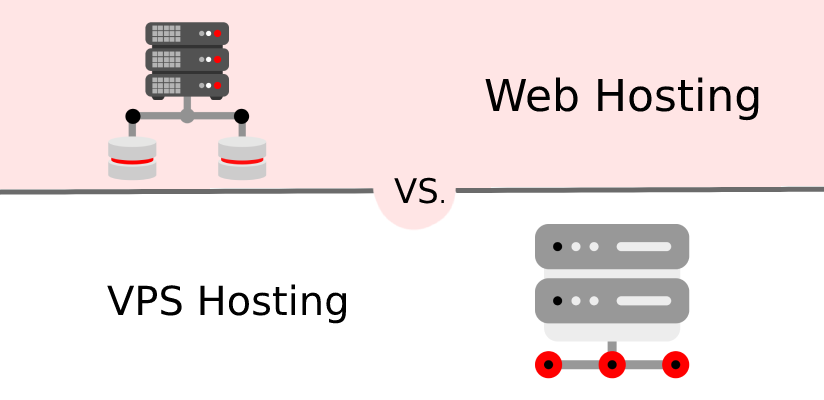
You’ve made the decision to launch a site. You’ve registered a domain and now have to find a web hosting service that can provide you with server space. There are a variety of hosting services that are designed to accommodate different kinds of websites, and it could become confusing. Don’t worry as we’ll discuss the two most well-known kinds of web hosting that will meet your requirements. In this article, we’ll discuss what is web hosting. What is VPS hosting? What is shared hosting? And finally web hosting vs VPS hosting.
In essence, shared hosting is the most affordable of the many options available, as you’re sharing a server with other websites. It comes with a certain amount of resources, however, you’re capable of running a modest website without having to spend a lot of resources. VPS hosting On the other hand allows you to have more control and performance, however, it’s somewhat more expensive.
Down below, we’ll talk more about shared hosting vs VPS.
What Exactly Is Shared Hosting?
Imagine shared hosting is like living in an apartment, where you must share areas like the backyard pool, backyard, or parking lot. In this scenario, your website will be sharing the same resources like processor, disk space, and memory with other users sharing the same server.
Shared hosting is the most affordable choice of all. Your site may be limited in bandwidth and become slow when there’s a large amount of traffic clogging websites sharing the same server as you.
It is possible to enjoy the pool in the quiet times however, you need to be aware of when everyone comes in and the place gets tight as shared hosting is very similar. The cost-friendliness of this type of hosting makes people want to buy shared hosting.
Pros
- A more beginner-friendly host solution
- Offers a standard configuration
- Requires less technical expertise
- The cheapest of hosting choices
Cons
- It often has lower storage and bandwidth than VPS
- is prone to error when there is a lot of number of visitors
- You are limited in access to the backend
- It’s not a way to grant root access.
What Is VPS?
With VPS hosting, you’ll continue sharing one physical server but each user has specific resources. This means that other websites hosted on the same server won’t impact you, as opposed to shared hosting. VPS hosting comes with a distinct virtual partition per user. This makes sure that resources are always available to users. Naturally, VPS comes at a higher cost than shared hosting. But when you buy web hosting such as VPS, you can take advantage of its resources.
If we’re to apply the same analogy that we did previously, then a VPS partition is similar to having an apartment, or even a condo. There are numerous units like this in the building, however, you’ve got everything you require and don’t need any obligation to rent it out to any other person.
Pros
- VPS hosting allows you to have access to the root of your server
- A lot more memory and bandwidth available, and easily scalable
- It isn’t affected by any other website’s traffic
- Faster and more stable than shared hosting.
Cons
- It is priced at a somewhat higher cost
- Technical expertise is required to effectively manage
Shared Hosting vs VPS Hosting: A Comparison
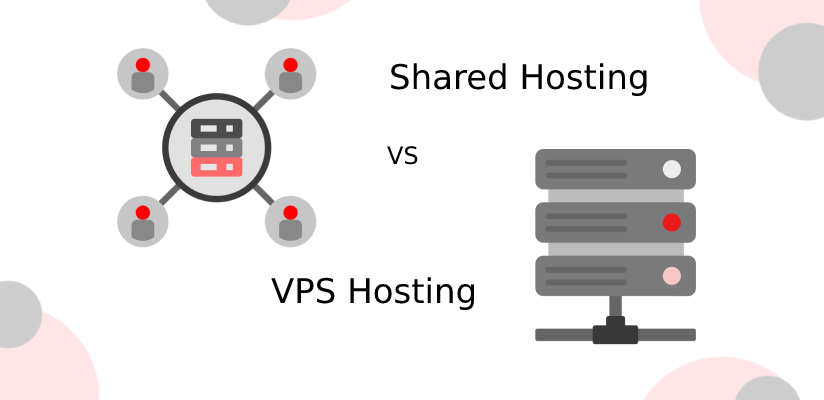
As if knowing the broad definitions isn’t enough, we’ll provide you with some examples of comparisons between two types of web hosting vs VPS vs shared hosting to help you determine which is the best option for your needs.
Security and Performance
Security is vital regardless of what type of site you have. Both hosting options are safe and reliable methods of hosting your website, however, there are some distinctions.
When you host your site on shared hosting, your website could be affected if there’s an error made by another website. Additionally, if the other sites consume more of the bandwidth shared your site may be slow. This is particularly important when your website is hit with large traffic volumes.
This issue can be avoided with the use of VPS because the partitioned servers ensure every website is working in the same way. If you do not have the technical expertise required to properly manage your virtual private server, you must consider other alternatives. If not managed properly it could cause numerous other issues.
Control Panel
If you’re seeking more advanced options for your website, VPS hosting is more ideal than the shared hosting plans. It gives you access to the root server, allowing you to install your own operating system cPanel, software, and other features to improve the performance of your site and ensure security.
However, shared hosting plans restrict the user to standard server configurations. This can be more suitable for those who do not want to handle server management tasks by themselves.
Server Administration
If you decide to host your site using shared hosting, you can rest assured that there is minimal or no maintenance that you will need to do. Shared hosting providers install their shared servers, install and update the required software, such as cPanel or Plesk and then ensure that the servers are monitored to prevent interruptions and take charge of the backend.
However, VPS hosting is slightly more difficult to manage resources. It requires some more advanced expertise to manage and administrate. Luckily, VPS hosting lets you alter and configure software and applications to boost the performance of your website, provides root access and lets you modify the back end of your website to your specific needs.
Scalability
VPS hosting makes it simpler to expand when compared to the shared host. While shared hosting can be ideal for a short-term solution or for a smaller online site, you’ll experience more problems with overall performance if your website has large traffic volumes.
VPS hosting permits you to expand quickly and efficiently and, if you are able to forecast the growth of your website, VPS hosting might be an excellent investment for the future.
Pricing
Shared hosting has the edge in this class. However, VPS web hosting prices do justify its greater advantage.
Conclusion
The hosting plan you choose is dependent on the content you want from your site. VPS hosting offers benefits that shared hosting can’t provide. There are advantages to both hosting choices.
Before you pick a hosting service for your website take note of the features you’re interested in the most.
Key Differences Between Web Hosting and VPS Hosting
When comparing web hosting and VPS hosting, it’s essential to understand how each service operates and the benefits they offer. Web hosting is typically more affordable, suitable for smaller websites, and requires minimal technical knowledge. In contrast, VPS hosting provides more control, better performance, and is ideal for growing websites with higher traffic demands.
- Resource Allocation: Web hosting shares resources among multiple users, while VPS hosting offers dedicated resources for your site.
- Performance: VPS hosting generally provides faster loading times and better uptime compared to shared web hosting.
- Scalability: VPS hosting allows easier scaling as your website grows, whereas web hosting might require migration to a more robust solution.
How to Choose Between Web Hosting and VPS Hosting
Deciding between web hosting and VPS hosting depends on your specific needs and future growth plans. Consider the following steps to make an informed decision:
- Assess Your Website’s Traffic: If your site receives high traffic, VPS hosting is likely the better choice.
- Determine Your Technical Expertise: Web hosting is easier for beginners, while VPS requires some technical knowledge.
- Budget Considerations: Web hosting is more budget-friendly, but VPS offers better value for money in terms of performance.
Cost Comparison: Web Hosting vs VPS Hosting
| Feature | Web Hosting | VPS Hosting |
|---|---|---|
| Average Cost | $3-$10/month | $20-$100/month |
| Setup | Quick and easy | Requires more setup time |
| Customization | Limited | Highly customizable |
FAQ
What is the main benefit of VPS hosting over web hosting?
The main benefit of VPS hosting is the dedicated resources it provides, resulting in better performance, reliability, and scalability for websites with higher traffic demands.
Is VPS hosting suitable for beginners?
VPS hosting can be more challenging for beginners due to its technical nature, but many providers offer managed VPS services to simplify the process.
Can I switch from web hosting to VPS hosting easily?
Yes, most hosting providers offer straightforward migration services to help you transition from web hosting to VPS hosting as your website grows.
For more in-depth information about our hosting solutions, explore our comprehensive VPS hosting plans that cater to various needs and budgets.
Understanding Resource Allocation in Web Hosting vs VPS
One of the key differentiators between web hosting and VPS is how resources are allocated. In traditional web hosting, resources such as CPU, RAM, and storage are shared among multiple users on a single server. This means that if one website experiences a spike in traffic, it could potentially affect the performance of others hosted on the same server.
Conversely, a VPS (Virtual Private Server) provides dedicated resources for each user. Although multiple VPS instances share the same physical server, each VPS operates independently with its own allocated resources. This ensures that your website’s performance is not impacted by other users, offering a more stable and reliable hosting environment.
For businesses with moderate to high traffic websites or those running resource-intensive applications, VPS hosting is often the better choice due to its ability to handle increased demand without performance degradation.
Security Considerations: Web Hosting vs VPS
Security is a critical factor when choosing between web hosting and VPS. Shared hosting environments can be more vulnerable to security breaches because multiple users share the same server. A vulnerability in one website could potentially expose others to risks, making it imperative to rely on the hosting provider for robust security measures.
In contrast, VPS hosting offers enhanced security. Each VPS operates in its own isolated environment, reducing the risk of cross-site contamination. Users have more control over security configurations, including the ability to install custom firewalls, antivirus software, and other security protocols tailored to their specific needs.
For websites handling sensitive data, such as e-commerce sites, VPS hosting provides a more secure solution, allowing businesses to implement advanced security measures to protect their customers’ information.
Scalability: Adapting to Growth with Web Hosting and VPS
Scalability is another important consideration when deciding between web hosting and VPS. Shared hosting is typically less scalable; as your website grows and requires more resources, you may find yourself constrained by the limitations of the shared environment. Upgrading usually involves moving to a plan with fewer users per server, which can be a cumbersome process.
VPS hosting, on the other hand, offers greater scalability. Since you have dedicated resources, you can easily upgrade your plan as your website’s demands increase. This flexibility allows for seamless scaling without the need for significant downtime or complicated migrations.
- Vertical Scaling: Increase resources like CPU, RAM, and storage within the same server.
- Horizontal Scaling: Add more VPS instances to distribute load effectively.
For businesses anticipating rapid growth, VPS hosting provides a more adaptable solution, ensuring your hosting environment can grow alongside your business needs.
Troubleshooting Common Issues in Web Hosting vs VPS
While both web hosting and VPS come with their own set of challenges, understanding common issues and how to address them can help maintain optimal performance. In shared hosting, resource limitations can lead to slow load times, especially during traffic spikes. Regularly monitoring your website’s performance and optimizing content can mitigate these issues.
VPS users might encounter configuration errors or software conflicts due to the increased control they have over their environment. It’s essential to have a basic understanding of server management or work with a knowledgeable IT professional to troubleshoot and resolve such issues efficiently.
| Common Issue | Web Hosting Solution | VPS Solution |
|---|---|---|
| Slow Load Times | Optimize images and scripts, use caching plugins | Upgrade resources, optimize server settings |
| Security Vulnerabilities | Rely on provider’s security measures | Implement custom firewalls and security protocols |
| Resource Limitations | Upgrade to higher-tier shared plan | Scale resources or add VPS instances |
By understanding these common issues and their solutions, you can better manage your hosting environment, whether you choose web hosting or VPS.

Behzad Nategh is the Founder and CEO of Rackset, with 20+ years in web hosting, cloud infrastructure, and web design. He writes on hosting, domains, security, and growing an online business.
Leave a Reply