In this step-by-step tutorial, we will address one of the most controversial problems that arise between users of VPS as well as Microsoft Windows, which is about how to access Windows server on Windows using RDP. We’ll go over a remote desktop connection and how you can connect to a server once you buy Windows VPS server hosting using its IP address.
First, we’ll discuss what a remote desktop connection is and then how to access VPS using a remote desktop.
What Is Remote Desktop Connection?
Remote Desktop Protocol (RDP) is among the essential tools in Microsoft Windows, which is responsible for Windows remote desktop connectivity. This program, available in every version of Windows, lets you gain remote access to your computer and work on it on the internet.
Once you have established your RDP link to the computer, it is possible to effortlessly control it as if it was right directly in front of you. We believe that you understand the reason this software is believed to be so important for its users.
Connect to Windows VPS Server from Windows in 3 steps
In the next section below, you will be able to see the various steps involved in setting up an internet connection via a remote desktop on Windows 10. It is important to note that we have selected Windows 10 by way of illustration in this article. The procedures used to establish the RDP connection with another version of Windows are similar to the ones we have used in this guide.
Step 1: Launch the Remote Desktop Connection software
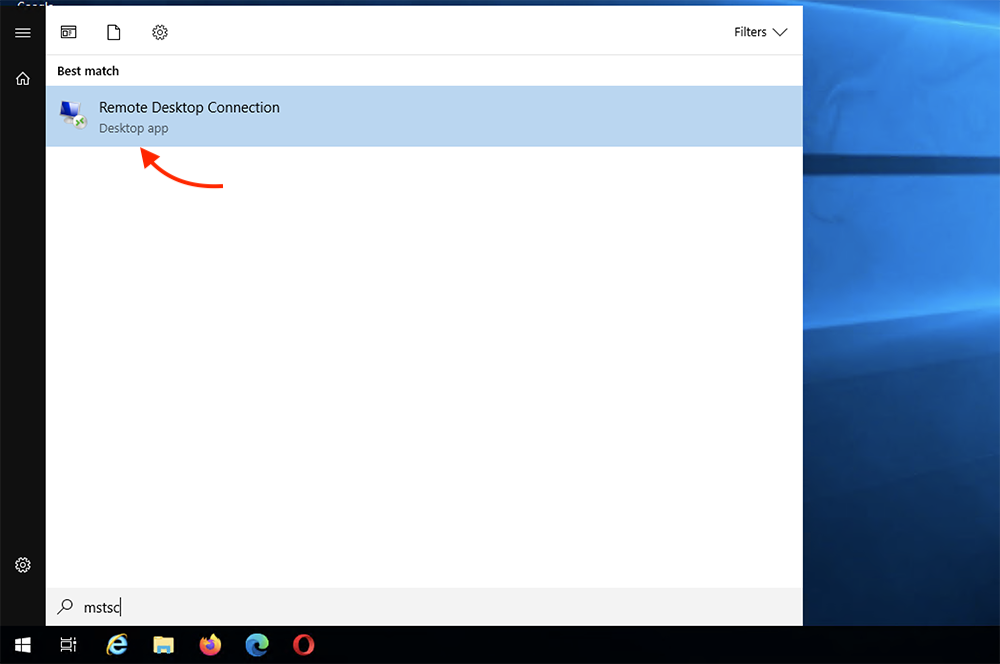
To access your Windows VPS server, click on the Start Menu, All programs, Accessories, and locate Remote Desktop Connection. Choose the Remote Desktop Connection icon, and double-click it.
Or you can type “mstsc” into the Run textbox and then press Enter.
For a simpler method, simply type remote desktop within the box for Remote Desktop.
Step 2: Type in an IP address
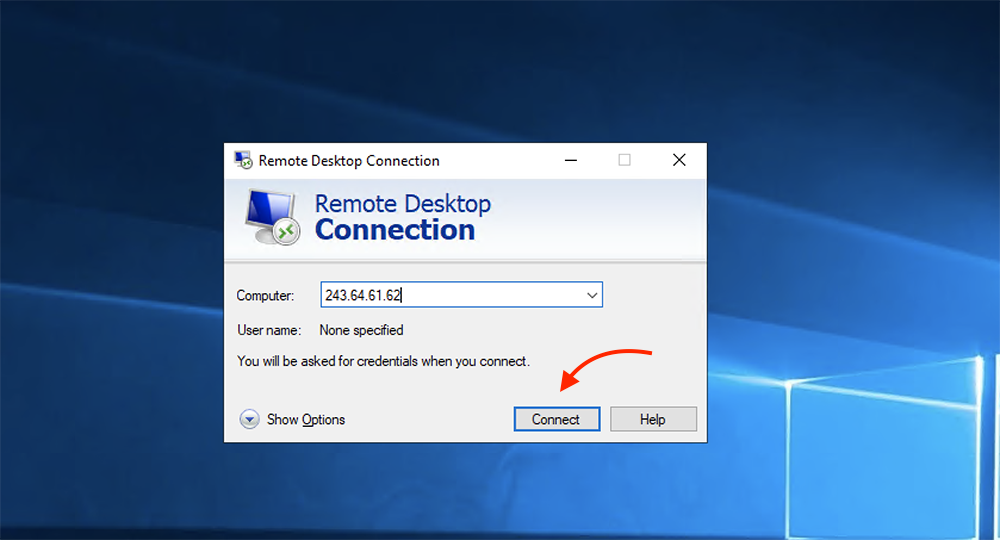
Once you buy Windows VPS hosting, you will be given an IP address that you can use to connect to a Windows VPS server from Windows. In the window that appears, type in the IP address of your server into the “Computer” field, and then select “Connect”.
Step 3: Type in Your Username and Password
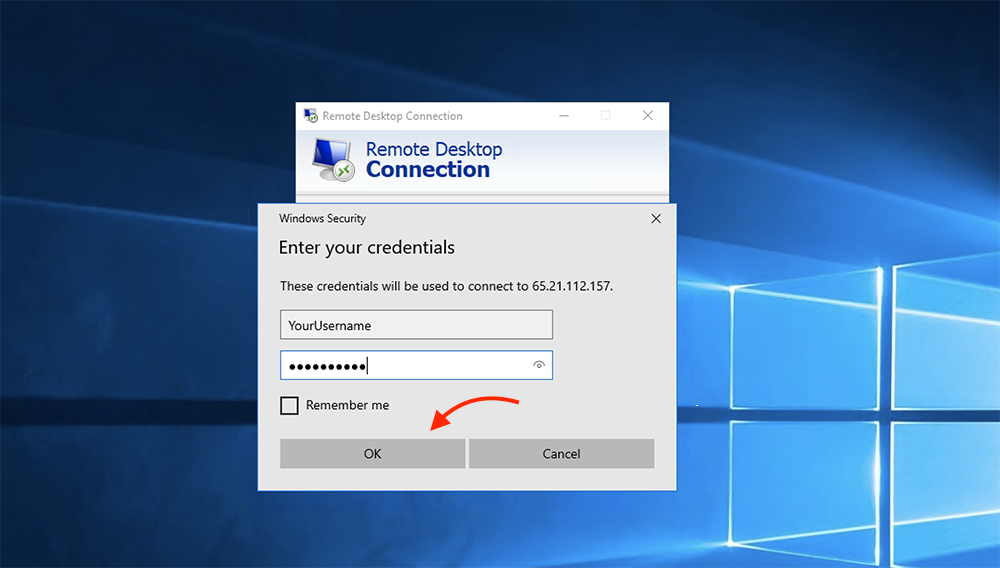
At this point, the following window will appear. It is necessary to enter your password and username in this window, then click “Ok”.
You can click on the “Remember me” box to save your username and password in case you need to connect again. Congratulations. After following the steps mentioned above, you’ve now been connecting to your Windows VPS via RDP. Now is the time to begin with your Windows VPS and run any software you want, exactly like your personal computer.
How to Close Remote Desktop Connection to Your VPS
When you are done with your work then, you can simply end your Remote Desktop connection like the image below:
- Hit the Start Menu button.
- Find the icon that looks like a human, then click it.
- “Sign in” Click “Sign out”
It is important to end the RDP connection when you’ve completed your work, particularly when you are using an unsecured public computer. If it’s your own device, and you are planning to return to the RDP session in the near future, it is fine for you to maintain the connection alive. If you have any errors with credentials detected, you can try this solution.
Conclusion
Congratulations, if you are reading this, it means you now know how to access Windows VPS using remote desktop connection. You can easily connect to a Windows VPS server from Windows via RDP by using the username, password and IP address that has been given to you once you buy Windows VPS server hosting.
Step-by-Step Guide to Connect to VPS on Windows 10
Connecting to a VPS on Windows 10 can be straightforward if you follow these steps:
- Open Remote Desktop Connection: Search for ‘Remote Desktop Connection’ in the Windows search bar and open it.
- Enter the VPS IP Address: In the ‘Computer’ field, input the IP address of your VPS server.
- Connect: Click ‘Connect’ to initiate the connection. You may be prompted to enter your VPS credentials.
- Authenticate: Enter the username and password provided by your VPS hosting provider.
- Access the VPS: Once logged in, you can access and manage your VPS as needed.
Common Connection Issues and Solutions
If you encounter problems while connecting to your VPS, consider these solutions:
- Check Network Settings: Ensure your internet connection is stable and the firewall allows Remote Desktop connections.
- Verify Credentials: Double-check your username and password for accuracy.
- Update Remote Desktop: Make sure your Remote Desktop application is up-to-date.
Comparison of Connection Methods
| Method | Ease of Use | Security | Speed |
|---|---|---|---|
| Remote Desktop Connection | High | Moderate | Fast |
| Third-Party Tools (e.g., TeamViewer) | Moderate | High | Moderate |
FAQ
What is a VPS and why use it?
A VPS (Virtual Private Server) provides a virtualized environment that mimics a dedicated server within a shared hosting environment. It’s ideal for businesses needing more control than shared hosting offers.
Can I connect to my VPS from a mobile device?
Yes, you can connect to your VPS from a mobile device using Remote Desktop apps available for Android and iOS.
How do I improve VPS connection speed?
To enhance connection speed, ensure your internet connection is robust, reduce background applications, and consider upgrading your VPS plan for better resources.
For more robust VPS solutions, explore our VPS hosting plans that offer scalable resources and enhanced security.
Understanding Remote Desktop Protocol (RDP) and Its Alternatives
Connecting to a Windows VPS often involves using the Remote Desktop Protocol (RDP), a proprietary protocol developed by Microsoft that provides a user with a graphical interface to connect to another computer over a network connection. RDP is the default method for Windows users due to its seamless integration and ease of use. However, understanding RDP’s functionality and its alternatives can enhance your VPS management skills.
RDP allows you to access your VPS as if you were sitting right in front of it, providing capabilities such as file sharing, printer redirection, and clipboard sharing. Despite its advantages, RDP can sometimes be restricted by network firewalls or may not be the most secure option without additional configuration. Alternatives like Virtual Network Computing (VNC) and Secure Shell (SSH) with X11 forwarding are worth considering for users who need different features or enhanced security.
VNC provides a platform-independent way to access your VPS, although it might not offer the same performance level as RDP. SSH with X11 forwarding is a more secure option but requires more setup and is primarily used for Linux-based servers. Understanding these alternatives helps you choose the right tool for your specific needs.
Configuring Security Settings for Safe VPS Connections
Ensuring the security of your VPS connection is crucial, especially when dealing with sensitive data. While RDP is convenient, it is essential to secure your connection to prevent unauthorized access. Start by changing the default RDP port from 3389 to something less predictable, which can help reduce the risk of automated attacks.
Implementing strong password policies is another critical step. Ensure that your VPS users have complex passwords that include a mix of uppercase and lowercase letters, numbers, and special characters. Additionally, consider enabling Network Level Authentication (NLA), which requires the user to authenticate before establishing a remote session, adding another layer of security.
For enhanced security, consider setting up a Virtual Private Network (VPN) to encrypt your internet traffic. This adds a protective layer by ensuring that all data transmitted between your local machine and the VPS is encrypted, reducing the risk of interception by malicious actors.
Troubleshooting Common RDP Connection Issues
Despite its reliability, you may encounter issues when connecting to your VPS using RDP. One common problem is the inability to establish a connection, which can stem from incorrect IP addresses or firewall settings blocking RDP traffic. Ensure that your VPS’s firewall allows incoming connections on the RDP port and that you’re using the correct IP address.
Another issue may be related to network connectivity. If you experience lag or disconnections, check your internet connection for stability and speed. Sometimes, adjusting the RDP connection settings to lower the display quality can improve performance over slower networks.
If you receive an error message stating that the remote session was disconnected due to a licensing protocol error, it might require reconfiguring the RDP licensing settings on the server. Regularly updating your Windows operating system and RDP client can also prevent many connectivity issues by ensuring compatibility and security.
Best Practices for Managing Multiple VPS Connections
Managing multiple VPS connections can be challenging, but following best practices can streamline the process. Utilize a Remote Desktop Manager tool, which allows you to store and organize multiple RDP connections in one place, making it easier to switch between different servers.
Label your connections clearly within your RDP manager, using descriptive names or tags that help you quickly identify the purpose of each VPS. This organization reduces the risk of connecting to the wrong server and improves efficiency.
Regularly review your list of VPS connections to remove any that are no longer needed. This not only helps maintain security by eliminating outdated or unnecessary access points but also keeps your workspace organized. Finally, ensure that you back up your connection settings to prevent loss of data in case of system failure or migration to a new machine.
Understanding Different Connection Protocols for VPS
When connecting to a VPS on Windows 10, it’s essential to understand the different protocols available. Each protocol offers unique advantages and can be suited to different needs based on security, speed, and ease of use.
Remote Desktop Protocol (RDP): RDP is the most common method for Windows users. It provides a graphical interface, making it easy to use for those familiar with the Windows environment. RDP is built into Windows 10, which means no additional software is required. However, it’s crucial to ensure that RDP connections are secured with strong passwords and firewalls to prevent unauthorized access.
Secure Shell (SSH): While SSH is more commonly associated with Linux servers, Windows users can connect to a VPS using SSH if the server supports it. SSH is known for its robust security features, encrypting all data transferred between the client and server. Tools like PuTTY or Windows PowerShell can be used to establish an SSH connection.
Comparing GUI and Command-Line Access
When connecting to a VPS, Windows 10 users can choose between graphical user interface (GUI) access and command-line access. Each method has its pros and cons, which can influence your decision based on your technical comfort level and the tasks you need to perform on the server.
GUI Access: Using RDP provides a familiar Windows interface, making it easier for those who prefer visual navigation. This method is ideal for users who need to manage applications or perform tasks that require a graphical interface. However, GUI access can consume more resources and may be slower over limited bandwidth connections.
Command-Line Access: SSH offers command-line access, which can be more efficient for users comfortable with text-based commands. This method is often faster and uses fewer resources, making it ideal for managing server configurations, deploying applications, or performing automated tasks. Command-line access is particularly beneficial for scripting and automation.
Best Practices for Secure VPS Connections
Security is paramount when connecting to a VPS. Implementing best practices can protect your server from unauthorized access and potential breaches.
- Use Strong Passwords: Ensure that both your Windows and VPS accounts are protected with strong, unique passwords. Consider using a password manager to generate and store complex passwords.
- Enable Two-Factor Authentication (2FA): Wherever possible, enable 2FA for an added layer of security. This involves a secondary verification step, such as a code sent to your mobile device, to confirm your identity.
- Regularly Update Software: Keep your operating system and any remote connection software up to date to protect against vulnerabilities. Regular updates can patch security flaws that could be exploited by attackers.
Troubleshooting Common Connection Issues
Encountering issues while connecting to a VPS is not uncommon. Understanding common problems and their solutions can help you quickly resolve connectivity issues.
Firewall Settings: Ensure that your firewall settings on both the local machine and the VPS are configured to allow remote connections. Check for any blocked ports that might be preventing the connection.
Network Connectivity: Verify that your internet connection is stable. A weak or intermittent connection can disrupt the remote session. Consider using a wired connection for more reliable performance.
Server Configuration: Double-check the server settings to ensure that remote access is enabled. Sometimes, incorrect server configurations can prevent successful connections. Reviewing server logs can also provide insights into any access issues.
Leave a Reply