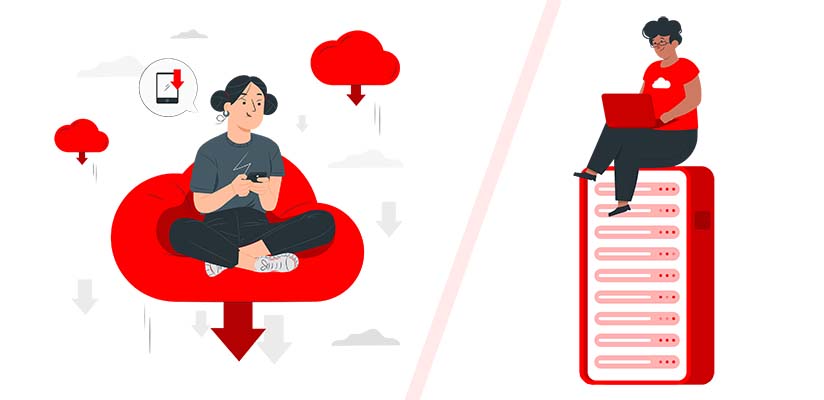
Bare-metal servers are like dedicated servers in that they’re each a single-tenant machine. This kind of machine gives users complete access to hardware. There is a possibility to gain such access because single-tenant machines don’t use the hypervisor layers, which are the ones that create the virtual machine (VM) and put it onto the server. In order to eliminate the need for layers, the operating system is directly loaded on the server. This direct loading leads to some of the fastest servers available.
In bare-metal servers, it is possible to set up the processor as well as memory (unshared) as well as storage. Virtual machines don’t have this capability since the provider controls the hardware.
Both bare metal server vs cloud server servers offer users reliable performance due to the fact that the hardware powers their web hosting and applications exclusively. The main distinction between bare metal vs cloud server boils down to the degree of flexibility in the contract in addition to the high quality of the hardware.
High-end processors RAM, NVMe solid-state drives, as well as other hardware devices that are the bare metal servers. Servers that are dedicated do not come with these features.
For contracts, cloud servers provide the option of billing more flexibly. The only cost you pay is the amount you utilize them, and they also have a pay-by-hour option. So, what is the main difference between bare metal and cloud server?
What is Bare Metal Server Hosting?
What is a bare metal server? And should you buy bare metal server? A bare-metal server is a physical server that is dedicated to one tenant. The tenant of the server can customize the server in accordance with the requirements of its performance security, reliability, and security. An alternative to a traditional steel server can be described as a virtual server where many users share a server’s computer, storage, and other resources.
Bare metal servers are called single-tenant physical servers or dedicated servers that are managed. In a bare-metal server, its operating systems directly plugged on the server, removing layers and providing higher performance.
A business may run dedicated servers at their own data center, or colocation centers or lease them on an hourly or monthly basis from a managed service provider.
What is Cloud Server Hosting?
What is a cloud server? Is it worth it to buy a cloud server? Cloud server is a pooled central server resource that is hosted and distributed over an Internet network, typically via the Internet. It can be accessed at any time by many users. Cloud servers are able to perform the same functions as physical servers providing computing power, storage capacity and applications.
Cloud servers can be found anyplace in the world, and provide services remotely via cloud computing environments. Contrary to conventional dedicated server equipment is generally placed in a physical location for use only by a particular company.
Differences Between Bare Metal Server vs Cloud
The main difference between bare metal servers as well as cloud servers is the latter is a virtual machine and the one is a physical machine. A bare metal server is a physical object and is easily identified inside a data center. Although it may sound evident, in the age of virtualization this distinction is vital. The bare metal server sometimes referred to as a physical server or dedicated server, is in a secure and controlled secured data center.
If you buy cloud servers it is a virtual machine (VM). The VM is characterized by abstract disks memory, CPU, and memory The virtualized server is simple. In this multi-tenant system, it is possible to have several virtual instances, which means that the host computer is sharing its resources. Each user is entitled to a certain amount of RAM, CPU, storage, and also the most popular cloud configurations. Each user gets just a small portion of larger shared storage.
Pros and Cons of Bare Metal Server
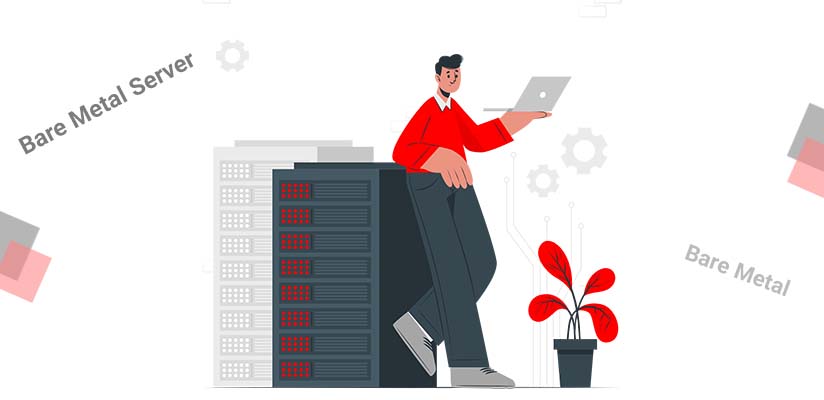
Pros of Bare Metal Server
Are you focusing on performance as your primary goal? If so it’s impossible to go wrong with the bare-metal option. They are more efficient for high-demand applications and can handle the load of heavy work. Processing of large data volumes, applications that are affected by performance, almost any process that needs greater resources will benefit by running on a bare metal server.
They also provide the benefit that they dedicate all the hardware resources to one tenant. Because it is only a single user, performance degrading and variations are less likely. Servers with only one tenant offer the advantage of superior security. An organization that is sensitive to security may be hesitant to select multi-tenant environments since the possibility of violating the law is higher than in a single-tenant environment.
This setup is performance-oriented, and if that is what your business is looking for, this might be the right solution for you. One of the major benefits of using bare-metal servers includes increased processing power, greater output, and input operations per second, and more consistent network I/O as well as disk performance. In addition, you get an improved service quality because it can eliminate noise neighbor issues that you might encounter in a multi-tenant setting.
Cons of Bare Metal Server
If you work in a setting that has fluid workloads and performance isn’t important and you need to be able to perform your work efficiently, bare-metal is the ideal option. This is also true for applications that move fast and often or when you have tasks that need to run for a limited amount of time before switching off. In this kind of situation, the bare metal option isn’t the most ideal solution and you may want to consider switching to the cloud server instead.
If you aren’t concerned about the performance of your hardware it is possible to be paying more for a single-tenant environment, which isn’t the most cost-effective way to set up an option. If you are looking for a flexible environment, then bare metal may not be the right option. In order to improve your systems, you’ll need to purchase new equipment, set it up and update it. This requires time. You also need to shut off the device to make the adjustments, which causes delays.
Pros and Cons of Cloud Server
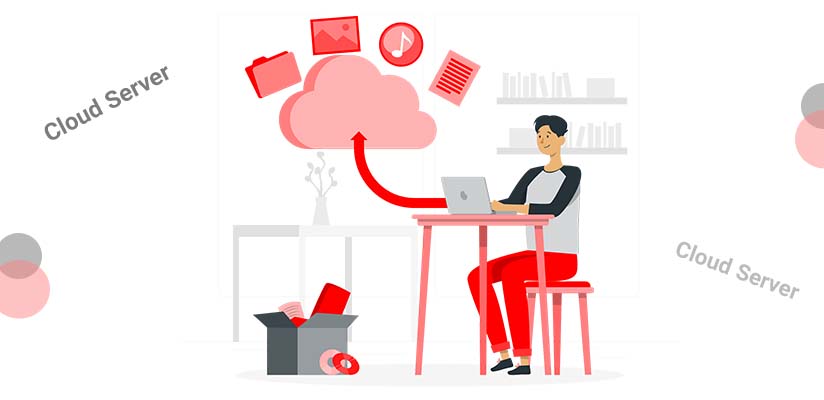
Pros of Cloud Server
If you want to complete a variety of tasks, Cloud servers are the best way to take. The addition of new resources to each virtual machine and then creating a new server is done in just a few minutes. Cloud servers are renowned for their capacity and flexibility. In environments with different workloads, cloud servers can rapidly scale their performance. This can also be a cost-effective solution.
The cost is for the required performance per minute and the cost remains at a minimum if you are dealing with tasks that aren’t demanding. Virtual machines are great for those who require a fast and efficient server environment in which you can connect to applications and data, utilize the machines, and then switch off the machines according to the workflow you are using. Additionally, it is a highly flexible environment that is built upon an infrastructure that is high-availability to provide a secure system.
Equipment and security aren’t as relevant to the virtual machine run by the host machine. In the virtualization world improving performance is resolved in just a few seconds, and doesn’t need to be permanent.
Cons of Cloud Server
The incredible power provided by bare metal cannot be equaled by virtual machines. However, there is the benefit that you can dynamically scale performance but resources are shared within an environment with multiple tenants. If one of your neighbors is processing data at a high speed and there’s less capacity available to you. If you have processes or applications that demand massive loads the cloud server may fail to cope with the demands of performance because of its limitations. This can cause poor performance and higher costs over the time that you utilize more resources than you normally would.
The performance of the physical hardware isn’t known, accessing it may be difficult in a variety of situations. It isn’t clear what the host’s condition is if it has inadequate equipment, making you unaware of the actual load. Security-wise, even if your VM runs OS, which will be considered to be an additional layer of security it is vulnerable to hacking from outside. In the event of a security breach, there is no direct access to the operating system, which means you’ll have to freeze your data on the spot.
Conclusion
Many businesses gain an advantage in competition with cloud and servers made of bare metal. They are able to manage large applications, workloads, and even process data. Both solutions share a lot in common however, when you look at the distinctions between Cloud and bare metal server it is easy to see that each comes with its own advantages as well as disadvantages. When it comes to which one is right for your business, it all depends on the nature of your business and the kind of work you have to handle.
If you require sheer horsepower to run performance-sensitive applications and heavy workloads, then bare metal servers might be right for you! However, if you’re seeking a flexible environment that is low-cost and runs on a high-availability network it’s best to buy a cloud server.
Check Bare Metal Server price vs Cloud Server Price.
Understanding CI with Cloud vs Bare Metal Servers
Continuous Integration (CI) is crucial for modern development workflows, and choosing the right infrastructure can significantly impact performance and cost. Here’s how cloud and bare metal servers differ in this context:
- Scalability: Cloud servers offer flexible scaling, ideal for fluctuating workloads. Bare metal provides consistent performance but requires manual scaling.
- Performance: Bare metal servers deliver high performance with dedicated resources, while cloud servers might experience latency due to shared resources.
- Cost: Cloud servers typically have lower upfront costs with pay-as-you-go models, whereas bare metal may involve higher initial investment but predictable long-term expenses.
Choosing the Right Server for Your CI Needs
When deciding between cloud and bare metal for CI, consider the following factors:
- Workload Consistency: If your CI processes require consistent high performance, bare metal might be more suitable.
- Budget Constraints: For teams with limited budgets, cloud servers provide a cost-effective solution with flexible pricing.
- Deployment Speed: Cloud servers can be deployed quickly, making them ideal for projects with tight timelines.
Comparison Table: Cloud vs Bare Metal for CI
| Aspect | Cloud Server | Bare Metal Server |
|---|---|---|
| Scalability | High, on-demand | Limited, manual |
| Performance | Variable | Consistent |
| Cost | Variable, low initial | Fixed, high initial |
| Deployment Time | Fast | Moderate |
FAQ
What is the main advantage of cloud servers in CI?
Cloud servers offer unparalleled scalability and flexibility, allowing teams to adjust resources as needed without significant upfront investments.
Why choose bare metal servers for CI?
Bare metal servers provide dedicated resources and consistent performance, which is crucial for high-performance CI tasks that require stable environments.
How do costs compare between cloud and bare metal servers for CI?
Cloud servers generally have lower initial costs with variable pricing, while bare metal servers involve higher initial costs but offer predictable expenses over time.
For more information on optimizing your server setup for CI, explore our dedicated server solutions that ensure top-notch performance and reliability.
Practical Use Cases for Cloud and Bare Metal CI
Understanding the specific use cases for cloud and bare metal CI can help organizations make informed decisions based on their unique needs. Cloud CI is often favored for projects that require rapid scaling and flexibility. For instance, startups and agile teams benefit from cloud CI’s ability to quickly adapt to changing demands without the need for upfront infrastructure investment.
On the other hand, bare metal CI is advantageous for projects that demand high performance and low latency. Industries such as finance and gaming, where processing speed is crucial, often opt for bare metal CI to ensure optimal performance. Additionally, organizations dealing with sensitive data might prefer bare metal CI due to its enhanced control over security and compliance.
- Cloud CI Use Cases: Startups, agile development teams, projects with fluctuating workloads.
- Bare Metal CI Use Cases: High-performance computing, latency-sensitive applications, data-sensitive industries.
Cost Considerations in Cloud vs. Bare Metal CI
Cost is a critical factor when choosing between cloud and bare metal CI solutions. Cloud CI often operates on a pay-as-you-go model, which can be cost-effective for short-term projects or those with unpredictable workloads. This model allows organizations to scale their CI resources up or down based on current needs, potentially reducing unnecessary expenses.
Conversely, bare metal CI typically involves higher initial costs due to the need for dedicated hardware. However, for long-term projects with consistent workloads, bare metal CI can become more economical over time, as it eliminates the recurring costs associated with cloud services. Organizations must carefully evaluate their project timelines and budget constraints to determine the most cost-effective solution.
- Cloud CI: Pay-as-you-go, scalable costs, ideal for short-term or variable projects.
- Bare Metal CI: Higher upfront investment, lower long-term costs for stable workloads.
Best Practices for Implementing Cloud and Bare Metal CI
To maximize the benefits of either cloud or bare metal CI, organizations should adhere to best practices tailored to each environment. For cloud CI, automation is key. Leveraging automated scaling and deployment can streamline processes and enhance efficiency. Additionally, using integration tools that are compatible with multiple cloud platforms can improve flexibility and reduce vendor lock-in.
In contrast, best practices for bare metal CI focus on optimizing hardware utilization and maintaining robust security measures. Regularly updating firmware and software ensures that systems run smoothly and securely. Furthermore, implementing comprehensive monitoring and logging solutions can help identify performance bottlenecks and security vulnerabilities.
- Cloud CI Best Practices: Automate scaling and deployment, use cross-platform tools, monitor cloud usage.
- Bare Metal CI Best Practices: Optimize hardware, ensure regular updates, implement robust security protocols.
Troubleshooting Common Issues in Cloud and Bare Metal CI
Despite their advantages, both cloud and bare metal CI can present challenges that require effective troubleshooting strategies. In cloud CI, common issues include latency and integration problems. To address these, organizations should ensure that their network infrastructure is optimized for cloud operations and that their CI/CD pipelines are compatible with cloud services.
Bare metal CI often encounters hardware-related issues, such as component failures or resource bottlenecks. Regular maintenance and proactive monitoring can mitigate these risks. Additionally, having a clear disaster recovery plan in place is essential to minimize downtime and data loss.
| Cloud CI Issues | Solutions |
|---|---|
| Latency | Optimize network infrastructure, use regional data centers. |
| Integration Problems | Ensure compatibility of CI/CD tools with cloud platforms. |
| Bare Metal CI Issues | Solutions |
|---|---|
| Hardware Failures | Regular maintenance, keep spare components available. |
| Resource Bottlenecks | Monitor resource usage, scale hardware as needed. |

Behzad Nategh is the Founder and CEO of Rackset, with 20+ years in web hosting, cloud infrastructure, and web design. He writes on hosting, domains, security, and growing an online business.
Leave a Reply